











One Battle After Another’s editor Andy Jurgensen tells Screen about the craft behind a memorable sequence.
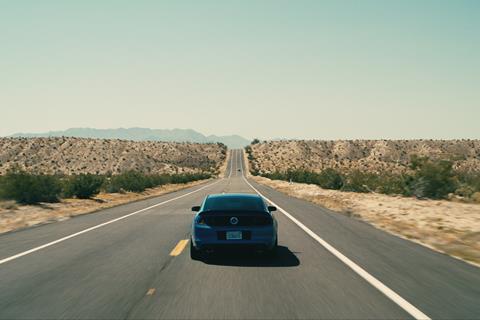
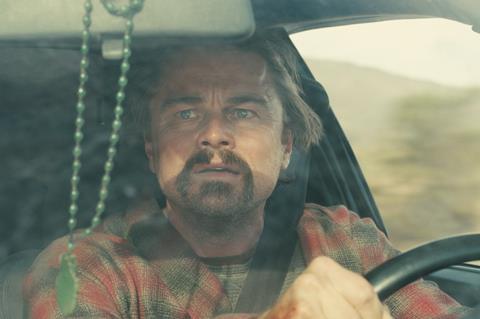
Paul Thomas Anderson’s One Battle After Another features several exhilarating car and foot chases, although perhaps none more so than a four-minute sequence involving Chase Infiniti’s Willa driving through a mountainous expanse of desert highway, pursued by John Hoogenakker’s white supremacist Tim Smith. He, in turn, is being pursued by Leonardo DiCaprio’s Bob. The location, dubbed the ‘river of hills’ by the crew, sees the cars travel along a series of undulating peaks and troughs.
Filmed in southern California’s Anza-Borrego Desert State Park, the chase was made up of three distinct sections. “First, when she’s on the road by herself and sees Tim Smith as a little sparkle in the rear-view mirror and he’s getting closer,” says One Battle After Another’s editor Andy Jurgensen, who cut Anderson’s Licorice Pizza (receiving a Bafta Film Award nomination) along with many of the director’s music videos.
“The second is that signature shot, a zoom-in of the road, you see Willa’s car come up, and you see Tim’s car come up, and, at the very end, you see Bob’s car. That was a shot we knew we had to get right and was going to be in the movie no matter what. The last part is the Texas Dip, where she goes into a valley and it’s straight for a while, right before the crash.”
Michael Bauman – director of photography for the Warner Bros-backed hit – shot the sequence with long lenses that compress the undulations of the road, making for a unique car chase and a roller-coaster ride for the actors and audience.
“We wanted to be right to that line of feeling a little uneasy, of being in her perspective, but not being too much where you can’t look at the screen,” explains Jurgensen, who began piecing the sequence together as Anderson filmed it.
“If everything was too smooth, it would have felt like a visual effect. I remember we did some takes and the camera was too blocked onto the front of [Willa’s] car, and it felt like we were shooting on a set. They loosened the nuts so the camera could shake a bit. And in sound, they added a little extra rattling, which justified it.”
To guard against the ride becoming too stomach-churning for viewers, Jurgensen watched it projected as he cut. “I don’t use a TV as my editing display,” he explains. “We have a big projector, so it’s being projected on a huge screen. During the ‘river of hills’ sequence, I put a chair close to the screen and pressed play because we wanted to make sure people didn’t get too motion-sick during it.”
Sound system
Early edits of the sequence were longer, but even as Jurgensen worked to refine it, he sent a long version to the sound department for their input. “Each of the cars have their own character in the sound, so we wanted to see how that was going to feel. That helped identify areas we could condense.”
Music was also key, with musician Jonny Greenwood composing the film’s score. “He’s not really writing to scenes,” says Jurgensen. “He’s communicating with Paul about how certain things might feel. Sometimes we’re cutting those things in, then cutting them up and sending it to Jonny and he adapts.
“It’s a very fluid process,” he continues. “He had this idea of this percussive beat for the music. Later, as we were getting deeper into the sequence, he knew we were going to be adding some strings, so we started laying those in and whittling it down. Once Jonny’s music was locked, we were making a few things musical, like having some of the revs work with the music and cutting on a beat to feel this rhythm. Everything ties into the sound and the music.”
Jurgensen continued to tweak the sequence right up to the final sound mix. “We had a good cut, but we were able to amp the sound even more,” he says. “Jonny was able to add these layers of strings as it’s building, which helped. I even made a few trims. It was evolving to the very end.”



No comments yet