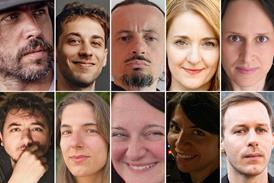
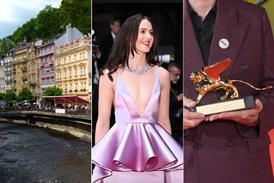
Paul Thomas Anderson, Jafar Panahi, Kaouther Ben Hania and producer Jim Wilson all talked about the relationship between politics and film while attending the 2026 Bafta film awards.
Anderson, who took home the prizes for best adapted screenplay, best director and best film for political thriller One Battle After Another, declined to discuss his own politics in the winners’ press room.
“I’ll ultimately fail in this situation. Where I have confidence I won’t fail is in the film,” the US director said of One Battle After Another, which follows a former revolutionary whose old enemy tracks him down.
“I have significantly more confidence in communicating my feelings about the world through my film, and I think that’s what we’ve done,” he continued.
“I’m not a politician, but I’m a filmmaker, so I’m trying to do it through the work.”
Berlinale debate continues
On the red carpet, attendees discussed the recent controversies at the Berlin Film Festival, including jury president Wim Wenders’s remarks about how “films are the opposite of politics”.
Iranian director Panahi, who previously won the festival’s Golden Bear, said while he had not been keeping up with the festival’s controversies in detail, he called Wenders a “great filmmaker” and that “if he says something, there’s a reason for it”.
“However, what I think is important in art and in cinema is that there should be no must or should or mustn’t,” the director told Screen International via a translator. “I think art needs to be independent and free, and I think every filmmaker makes the films they believe that they feel they have to do and that they should really be free from the chains of I should, I should not, one must, one must not.”
Panahi said he struggled to obtain a UK visa in order to attend the Baftas, where his film It Was Just An Accident was nominated for a film not in the English language, due to his previous imprisonment in Iran for anti-government propaganda.
“Celebrities should speak up”

Jim Wilson, the UK producer ofThe Voice Of Hind Rajab, suggested Wenders likely “misspoke” but that separating politics from film is a “really old-fashioned” concept.
“Politics is the way we organise our societies, the way we live together. That’s what politics is,” said Wilson, who also produced The Zone Of Interest. “Maybe there’s a difference between what politicians, party politicians, that’s different.
“[Separating film from politics] is not an interesting way to think about culture or any art, let alone cinema.”
Tunisian filmmaker Ben Hania, who directed The Voice Of Hind Rajab, said celebrities should use their platforms to speak up on the ongoing war in Gaza and other issues.
“Celebrities, for example, and people who have this kind of power can and should use their platform to defend justice, to ask for accountability,” she told Screen. “I think it’s very, very important.”
“We’re living in a world where denouncing stuff is not enough,” the film’s producer Nadim Cheikhrouha added. “Things are getting worse and worse, and the situation seems to be the same.
“[People] need to be a witness of what is happening, to recognise what is happening, and then all kinds of actions are possible. We have here a pinch from the Red Cross, and the idea is to open the humanitarian corridors. Do a real ceasefire. Anyone can do something at this level.”


No comments yet