






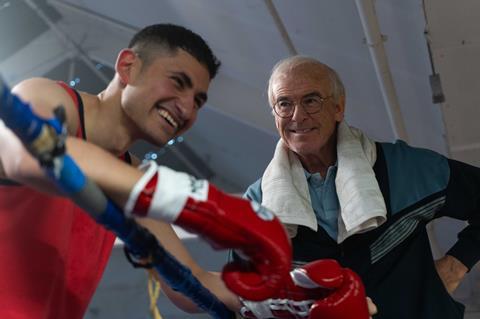
The Red Sea International Film Festival (RSIFF) kicks off its fifth edition on Thursday (December 4) with Rowan Athale’s Giant about British-Yemeni boxing champion Prince Naseem Hamed.
The film, which portrays the relationship between Hamed, played by Egyptian-British actor Amir El Masry, and his Irish boxing trainer Brendan Ingle, played by Pierce Brosnan, neatly sums what the festival is about, says Shivani Pandya Malhotra, managing director of the Red Sea Film Foundation.
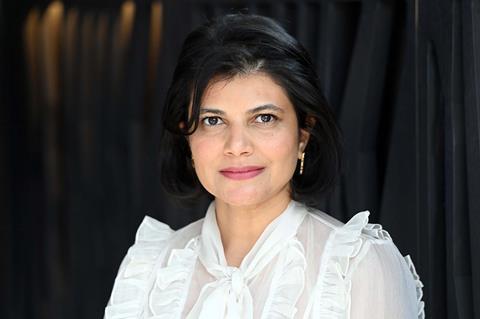
“It is a perfect representation for what we’re trying to deliver to the world – stories from our part of the world, told internationally, about a person who is loved in the region,” says Pandya Malhotra, who has been instrumental in growing the festival since its 2021 launch, having previously run the Dubai International Film Festival and Gulf Film Festival.
2025 line-up
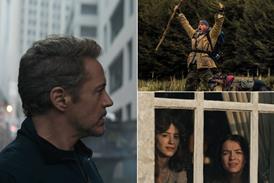
In total, Red Sea has programmed 111 films this year. The 16-strong competition lineup includes eight international titles and eight films from the Middle East region. Among them are Saudi best international feature Oscar submission Hijra and Cherien Dabis’s All That’s Left Of You, tracing three generations of a Palestinian family.
Sean Baker, whose Anora won five Oscars this year, presides over the competition jury.
Kaouther Ben Hania’s The Voice Of Hind Rajab and Olivier Laxe’s Sirât – also both Oscar entries, for Tunisia and Spain – are part of the festival’s Special Screenings programme.
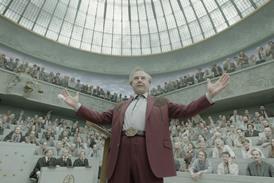
Its International Spectacular strand includes Alice Winocour’s Paris fashion week drama Couture, starring Angelina Jolie, and Olivier Assayas’ Russian political drama The Wizard Of The Kremlin, starring Jude Law and Paul Dano, while its Arab Spectacular strand features Annemarie Jacir’s historical drama Palestine 36 and Haifaa Al Mansour’s crime mystery Unidentified.
Elsewhere, Red Sea’s Festival Favourites strand pulls together 12 films which have stood out on the international circuit this year, among them Switzerland’s Academy Award entry Late Shift, starring Leonie Benesch, and Brazilian director Kleber Mendonça Filho’s Cannes favourite The Secret Agent. There are also sections for new Saudi features, classic films, and children’s and family movies.
Saudi and Middle East impact
Red Sea has come a long way in its first five years, in that short time helping to grow the Saudi and Middle East film sector by funding and promoting cinema from the region.
Its first edition in 2021 was held just as the country was starting to open up: Saudi Arabia had only just ended its 35-year ban on cinemas in 2018 as part of the Kingdom’s Vision 2030 plan to diversify its economy away from oil and transition the country towards a more moderate form of Islam.
At the time, many wondered if it was even safe to travel to Saudi. The aftermath of the 2018 assassination of journalist Jamal Khashoggi also cast a long shadow – one which still resonates today.
International stars such as Michael Douglas, Catherine Zeta-Jones, Cynthia Erivo, Vin Diesel, Spike Lee, Will Smith, Michelle Yeoh, Emily Blunt, Chris Hemsworth, Halle Berry, Gwyneth Paltrow and Nicolas Cage have attended Red Sea since then, their images on the red carpet helping to project a new version of Saudi and its film sector to the world.
On a wider level, Saudi Arabia has poured investment into its film industry including infrastructure such as Neom and Alula studio, and the new Jax and Quiddiya film studios near Riyadh. The country offers a 40% tax credit for international features, and has invested heavily in training schemes for young filmmakers. A huge number of cinemas have also been built – the country now has 68 cinemas with 621 screens across 20 cities, making it the biggest box office market in the Middle East region.
Foundation ecosystem
There is more to Red Sea than its red carpet and its film screenings, though. The festival is part of the Red Sea Film Foundation which is active across the full spectrum of film activity, from training to funding to the pitching and selling of films.
The Red Sea Foundation’s training and funding programmes – which include the Red Sea Fund and Red Sea Labs – have backed a new generation of filmmakers from Saudi and the MENA region. Among them is Tawfik Alzaidi, whose 2023 film Norah was the first ever Saudi film to make Cannes Film Festival’s official selection. High-profile films backed by the Foundation also include Kaouther Ben Hania’s Four Daughters, Amjad Al Rasheed’s Inshallah A Boy, Ali Kalthami’s Mandoob and Baloji’s Omen.
The Red Sea Fund, which has a budget of $15m a year, has supported over 280 films from the Arab world, Africa and Asia since its first edition. Seven films supported by the Fund have been put forward as their country’s selection for the Academy Awards this year, including Saudi director Shahad Ameen’s Hijra and Lebanese filmmaker Cyril Aris’s A Sad And Beautiful World.
Meanwhile, the festival’s market, the Red Sea Souk, will see 40 projects presented as part of its Project Market co-production platform, while the Souk Talks industry conversation programme includes execs from Netflix, Disney+, AGC Studios and France’s CNC. Around 160 exhibitors from more than 45 countries are set to take part in the Souk’s main marketplace.
“[Filmmakers] now recognise us as a platform to support them across the lifecycle of creating a film project,” says Pandya Malhotra.
New CEO
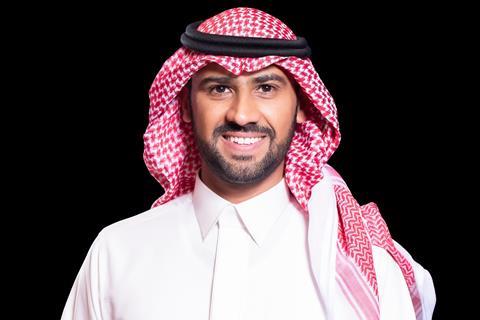
Faisal Baltyuor, who joined as CEO of the Red Sea Film Foundation earlier this year, echoes this point: “I’m proud of our ecosystem that supports films from end to end – from the idea to celebrating the best on the red carpet,” he says.
A producer and founder of leading Saudi distributor CineWaves Films, Baltyuor is widely considered a film industry pioneer in the country.
He has experienced first-hand how the festival has benefited him as a producer and a distributor, and wants to help build on its success.
Baltyuor picks out audience development as a focus for the year. Red Sea’s 2024 edition attracted 30,000 admissions – and the goal is to hit 40,000 this year.
“We want to have more audiences engaging with the festival,” he says. “How can we make them part of the festival? They are our current and future consumers, and some of them are our future filmmakers.”
He flags initiatives such as a partnership with the Tariq Abdulhakim Museum featuring events at a ‘Cultural Garden’ that will feature an outdoor cinema for the first time, with a strong focus on family activities.
Baltyuor also cites a new Voices of Tomorrow initiative designed to give young Saudi talents between the ages of 10 and16 the opportunity to showcase their short films at the festival.
2025 changes
Other new developments this year include an increase in networking opportunities for industry execs attending the Souk. There will be more events as well as “socials” each evening throughout the festival, says Pandya Malhotra.
Red Sea is also positioning itself more firmly into the awards calendar, screening a significant number of awards hopefuls that guild members can see if they are based in the region or visiting the festival.
There have also been changes within Red Sea’s programming team this year. Fionnuala Halligan, Screen’s former executive editor for reviews and new talent, joined as its new director of international programs, taking over from Kaleem Aftab. She is working alongside director of Arab programs and film classics Antoine Khalife to curate the festival’s line-up.
“Finn has been an incredible asset and introduction to our programming team,” says Pandya Malhotra. “She brings in a different perspective. She’s a woman, so I’m excited – we’ve got a nice balance between her and Antoine. She is also very passionate about developing audiences. For her, it has been very important to reach out to a lot of the universities here to talk about filmmaking.”
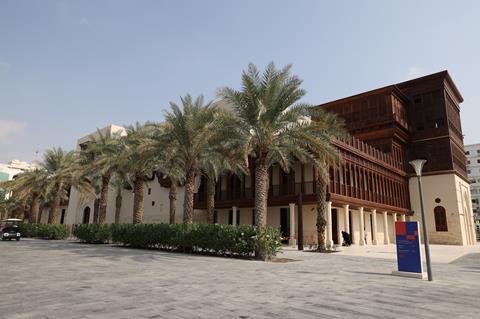
This year will be the festival’s second edition to take place in its new central Jeddah home, in a purpose-built venue in the historic Al-Balad district, famed for its traditional houses with wooden windows and balconies.
It’s just one of many key changes that Pandya Malhotra has overseen while growing the festival.
“We’ve evolved over the last five years,” she says. “It has been a very rapid change. It’s also been exciting – in a short space of time, there has been a fair amount of accomplishment.”
This has helped change attitudes towards the festival as well. The Foundation’s track record means there are now “results” to share with prospective attendees or backers. People who have visited the festival “have become our biggest ambassadors”, says Pandya Malhotra. The festival has helped to create a strong alumni network of supported filmmakers.
She cites director Baz Luhrmann, who headed the Red Sea jury in 2023 but undertook a recce trip to Saudi before committing. “He was like, ‘Oh my God, it’s so vibrant. Look at what is happening. You guys are so misrepresented.’”
Spike Lee presided over the jury last year and returned in spring to contribute to a boot camp held for filmmakers from the region.
Regional competition
Red Sea takes place at a busy point in the MENA festival calendar, which kicks off with October’s El Gouna film festival, Cairo and the new Doha festival in November, and Marrakech, which wraps its current edition this Saturday, December 6.
“The more the merrier,” says Pandya Malhotra.
Many of the events collaborate, sometimes strategically (Doha and Red Sea have supported films together) and sometimes more loosely. “We need a lot of support for the industry in these regions. The more avenues that filmmakers have, the better. It is better for all of us if our industries are growing.”
“We really push co-productions, we want people to collaborate,” she adds. “That is why we encourage so many regions to be part of everything that we are doing. It is the best way an industry can grow organically, when they get support from multiple institutes and organisations.”
Already, change is afoot in the region, believes Pandya Malhotra. “Previously, films in this region were predominantly supported by European funding. This is gradually changing. You see more regional institutes that are supportive. There is more money available now for independent cinema.”
But there is still more to do. “The awareness needs to be created [too] amongst the business communities, the banks, all of the infrastructure that supports the entertainment or film industry anywhere in the world. It’s a huge educational process – and it’s not one person or one institution that can do it. It’s a collective of many institutions.”




![Benjamin Kramer Headshot Photo Credit_CAA[40][40]](https://d1nslcd7m2225b.cloudfront.net/Pictures/100x67/8/2/9/1488829_benjaminkramerheadshotphotocredit_caa4040_107707.jpeg)

No comments yet