










The first European Film Awards (EFAs) took place back in November 1988 in West Berlin, a year before the fall of the Berlin Wall, with Krzysztof Kieślowski’s A Short Film About Killing winning its inaugural best European film prize.
Its launch followed an appeal by directors such as Ingmar Bergman, Federico Fellini and David Attenborough for an event that could promote the diversity of European filmmaking, amid fears it was losing ground to “homogenous” Hollywood movies.
And that is just what the EFAs have focused on for the past 38 years, celebrating filmmaking from Austria right through to France, Sweden and Ukraine.
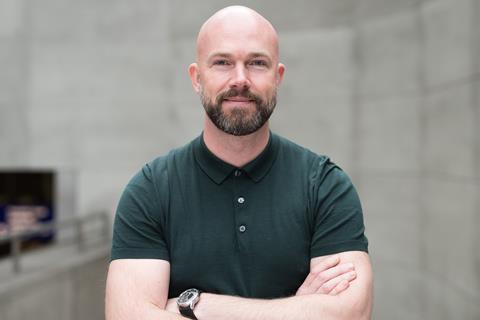
But this year represents something of a “milestone” for the EFAs, reckons Matthijs Wouter Knol, CEO of the event’s organiser the European Film Academy.
Taking place in Berlin on Saturday (January 17), the EFAs have moved from their traditional early December dates right into the middle of the awards season corridor, just after the Golden Globes and before the Baftas and Oscars.
Repositioning the awards
The ceremony’s date shift is part of the European academy’s long-planned strategy to reposition the awards. It hopes the new January date will create greater impact for nominated European films and enhance the academy’s role as a significant player in the global awards game.
Wouter Knol says the date move already seems to be working well for academy members, who now have the whole of December to watch and vote on nominated films. “People are saying I’ve really had time to think.”
He hopes this extra screening time might lead to members voting for a more diverse set of winners, rather than one film dominating on the night.
As an organisation that fights for the diversity and visibility of European cinema, “it’s great if awards are spread more widely over many titles,” says Wouter Knol.
For distributors, the date change is also a good thing, he explains. Now the EFAs are in the midst of awards season, “nobody has to make an extra effort to promote European cinema – we are in the same pipeline.”
Generic ceremonies
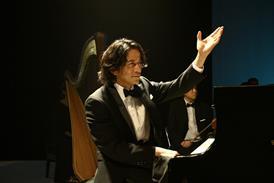
The academy is also planning to innovate for the awards ceremony itself, which takes place in Berlin’s House of World Cultures. Filmmaker Mark Cousins is part of the creative team, working with film composer Dascha Dauenhauer and stage director Robert Lehniger.
The academy aims for the show to be “an artistic experience in itself,” says Wouter Knol.
“Once a year we have an opportunity to bring a lot of people together and really celebrate European cinema… Why would we stick to a pattern that everybody is used to?”
The evening will be interspersed with “film essays a la Mark Cousins”, Wouter Knol explains, to “connect to the people, disciplines, arts and crafts and personalities we are celebrating”.
The idea is to celebrate more than a century of European cinema in a way that “will add surprise, a feeling of authenticity and also European soul, so that it is not just a generic award show that could take place anywhere else.”

Interventions
Cousins is known for his idiosyncratic documentaries including 2011’s 15-hour The Story Of Film: An Odyssey and 2024 Karlovy Vary Crystal Globe winner A Sudden Glimpse To Deeper Things. With Lehniger and Dauenhauer, he has created “12 little interventions over the evening which could zhuzh it up a little bit”.
He says academy president Juliette Binoche “wanted to refresh the language of an awards ceremony”.
“Awards ceremonies are important things, but like everything, they can do with play and ludic innovations,” says Cousins.
He is reluctant to share too many details of what will be in store for the 1,000 attendees, but highlights one of the ‘interventions’ to illustrate what to expect. Called ‘Snow’, it will feature a montage of snow scenes from European films projected onto two huge cinema screens on the stage, as well as onto the stage floor. It will include the snowy ending of Jacques Demy’s 1964 classic The Umbrellas Of Cherbourg. (At the end of the montage, Demy’s son Matthieu and his sister Rosalie Varda will come onto the stage.)
“I’ve edited certain moments which really ask the questions, ‘Why do we love cinema?’ and ‘Why can’t we take our eyes off cinema?’…It’s quite passionate, hopefully it’s quite fun and maybe even a little bit emotional.”
Why snow? “Because in Berlin there is a good chance of it snowing,” says Cousins.
He stresses the interventions are in no way meant to upstage the most important part of the evening – the moments of glory for each winner.
2026 frontrunners
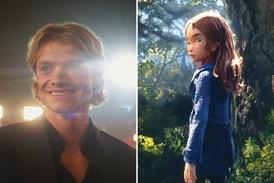
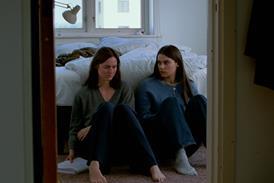
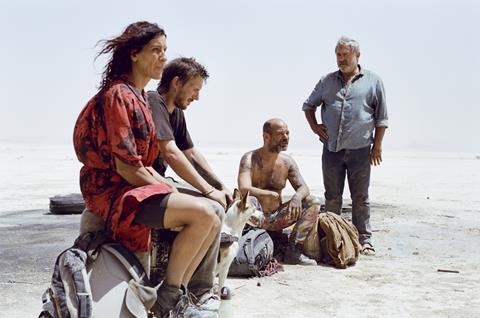
Among the frontrunners for this year’s awards are features such as Oliver Laxe’s Sirat with nine nominations, Joachim Trier’s Sentimental Value and Mascha Schilinski’s Sound Of Falling with eight nods each, Yorgos Lanthimos’s Bugonia with six and Jafar Panahi’s It Was Just An Accident with three.
In total, 88 nominees are in the running across 22 categories. Among special awards, Italian director Alice Rohrwacher will be honoured with the European achievement in world cinema award, and Norwegian actress and filmmaker Liv Ullmann will receive a lifetime achievement award.
For Wouter Knol, the 2026 nominees show “when it comes to original, authentic, powerful filmmaking, Europe has a lot to offer.”
Many of the EFA-nominated films are prominent in the line-ups of other international awards, he notes.
Nevertheless, it is a resolutely arthouse list, with four of the most nominated films all premiering in competition at Cannes. At a time of growing concern about European films failing to attract large audiences, should Europe be doing more to champion box office hits too?
“It is true that European films are not always the ones seen by most people,” acknowledges Wouter Knol. “But is that the measure of the quality and success of European cinema? In my opinion, culture is not a result of the most-seen, the most-popular. If you look at this year’s nominees, I think Europe has, as in the past years, an impressive lineup of films universally acknowledged as beautiful and outstanding, full of depth, creating the soul of our continent, and with a wide variety of voices. Do people remember the queues or box office sales for films of Pasolini, Varda, Bergman or Buñuel?”
“European cinema has truly come of age”
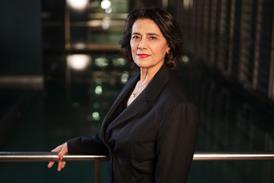
2026 marks a year of change for EFA in other ways too. Romanian producer Ada Solomon has taken over as chair from Irish-UK producer Mike Downey who has been in post since 2020, and was deputy chair from 2013.
Looking back over that period, Downey flags a “rapid transformation” of the academy aimed at modernisation, inclusivity and expanding its relevance beyond the awards ceremony.
Downey flags key changes such as a 30% increase in membership to 5,380 members in 52 countries, a radical restructuring of its board for better geographical representation, the launch of year-round initiatives such as its current European Award Season and Film Club, and a complete revamp of its “antiquated” digital presence.
Downey says he has also sought to make the Academy a “powerful voice for activism”, using its voice to defend filmmakers and support causes that are important to the artistic community. Notably, the Academy campaigned to free Ukrainian filmmaker Oleg Sentsov in 2019, following his arrest by Russia in 2014.
For Downey, one of the highs of his time in office was standing on stage in Berlin with the freed Sentsov only weeks after his release.
In the wake of the campaign, the Academy teamed with the International Documentary Festival Amsterdam (IDFA) and the International Film Festival Rotterdam (IFFR) to create the International Coalition for Film Makers at Risk (ICFR) organisation, set up to defend filmmakers and their right to continue their work in freedom and safety.
Downey highlights the key role ICFR played when Russia invaded Ukraine, establishing an Emergency Fund for Ukrainian Filmmakers (EFF), providing micro-grants for urgent needs like relocation, medical aid, and legal support – donating over €500,000 to filmmakers in need.
The mobilisation of the Academy as an agent for change has always been top of his agenda, says Downey. “I have tried to lead the Academy in a way that unites us in a generally progressive message backing the oppressed of society over those in power, and in a way that demonstrates unwavering support of freedom of expression.”
Asked for his take on the EFA 2026 lineup, Downey also picks up on the political and social nature of many of the nominated films, saying the selection demonstrates “a strong sense of solidarity among us, in the European film industry – a sense of social and political responsibility and political resistance that we share and practice.”
For him, the nominations make a wider point about the European film industry too. “I am convinced that European cinema has truly come of age as it brings to the fore compellingly authored films, very much the opposite of the Hollywood behemoths who seem to have, for the most part has run out of ideas and got lost in the franticness of franchises, reboots and knock-offs.”





No comments yet