





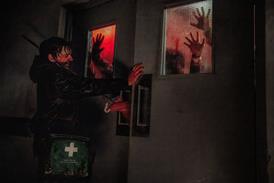

Mr Nobody Against Putin exposes the militaristic propaganda efforts at a Russian school. Director David Borenstein and co-director/subject Pavel Talankin tell Screen about their Bafta-winning film.
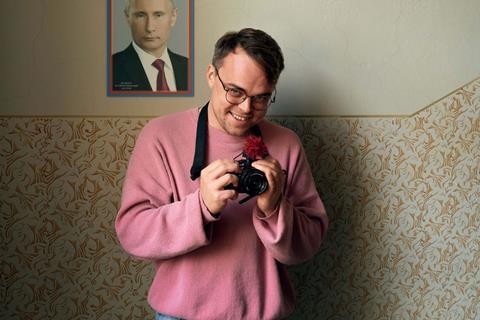
The Oscar-nominated and Bafta-winning documentary Mr Nobody Against Putin began life just days after Russia’s attack on Ukraine, as an ordinary Russian struggled to understand how his country was changing. His story emerged at the 2025 Sundance Film Festival and was hailed for its chilling portrait of the Russian regime’s propaganda efforts against its own people. But the film could only be made and shown because its Danish director David Borenstein first worked to get his Russian co-director, narrator and subject Pavel Talankin out of his native country.
“Initially, I thought that maybe I would just go to another region in Russia, like Vladivostok,” says Talankin from his new home in western Europe. “But they started introducing more and more laws that you cannot speak against the army, you cannot speak against the president, you cannot speak against the regime.
“At some point, I got the call from Helle [Faber, producer], and she told me they would not be able to show the film unless I’m outside Russia, but they can help me with documents. They still didn’t know where exactly I would go. For me, it became either showing this film or shutting up, and I just couldn’t do the second thing. I had to show it.”
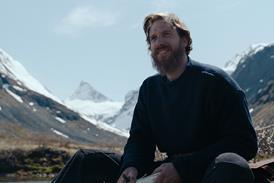
Pasha, as Talankin is known to his friends, was working in a job that he loved as a school events co-ordinator and videographer when a mandate came down from the Russian government at the beginning of the war with Ukraine. Each teacher was to deliver propaganda lessons in class, and Talankin’s role would now include recording these sessions and uploading them to a government website.
Unsure how to voice his opposition to this new political task, he briefly resigned — but decided to go back, continue filming and share what he saw with the world.
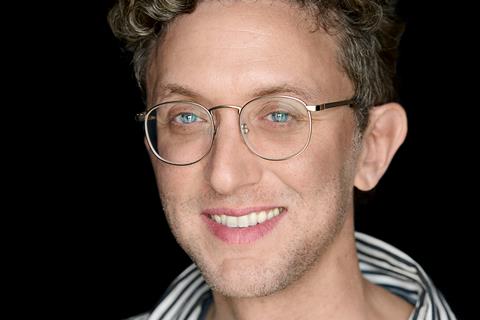
After posting his thoughts to a Russian media company, Talankin was put in contact with Copenhagen-based documentary filmmaker Borenstein, whose features Dream Empire (2016) and Can’t Feel Nothing (2024) played respectively at IDFA and CPH:DOX. The two began to shape an account of Talankin’s experiences: rather than dumping hundreds of hours of propaganda lessons online for posterity, as he had briefly considered, they would tell the story of Talankin’s experience in feature format.
The resulting footage, filmed between February 2022 and June 2024, paints a bleak picture of a population encouraged to absorb the government line, adopt a more militaristic outlook and in many cases to embrace outright disinformation. Making the film required conditions of strict secrecy, with Talankin and Borenstein exchanging information on encrypted servers and phone calls. Talankin’s departure from Russia became the framing device of the film.
“There’s a lot of stuff that’s hard to talk about openly,” says Borenstein from Copenhagen, during a brief break from his awards season travel. “Through that first year of filming, so much of what we were doing was criminalised. Some of the questions about who is filming Tasha himself is a difficult one for us to say. And it was impossible to put this film out in any way unless he was out [of Russia]. The Pasha escape plan affected the storytelling. It was, we’re going to centre Pasha as a character and everything is going to be on his shoulders, because we can’t evacuate multiple people, and we just had to limit it to one.”
Crafting a story
At first, Borenstein spent much of his time sorting and categorising the footage, and sometimes worked backwards to build up characters who’d had dramatic experiences. One of Talankin’s students lost her brother in the conflict, and Borenstein then looked back and discovered a wealth of earlier footage where she had discussed his conscription and her concerns for him (for her sake, however, Talankin vetoed a scene where she could be seen popping a pimple).
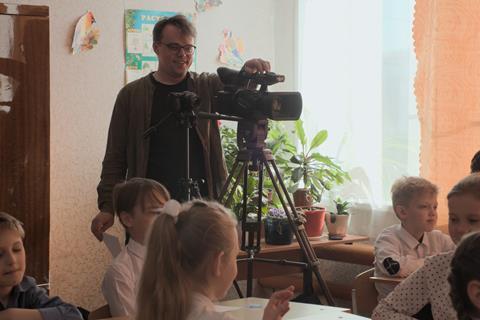
There was little “intentional” footage, as Borenstein puts it. One major exception was a direct-to-camera interview with Pavel Abdulmanov, an enthusiastically nationalistic teacher who seems to embrace the new tasks.
“You could make a whole film about Pavel Abdulmanov,” says Borenstein, who pushed for Talankin to interview the teacher. “He is like a character from some great work of Russian literature.”
Also included is a staff meeting where teachers discuss the toll the new demands are taking on students’ academic work, to highlight the damage done by the regime to his pupils and colleagues.
Still, it came as a shock to realise how central his role was when Talankin eventually reached Borenstein’s office and found his images all over the walls: “I was filming about propaganda, and David was filming about me.” Borenstein considered using their phone calls as a narration device, but instead — with Talankin’s input — wrote a script based on them for the Russian to record.
Partnering up
Borenstein began the project acting as his own producer, with a small amount of funding from the BBC. He brought on board Danish producer Faber in autumn 2022, who secured Mr Nobody’s major funding from the Danish Film Institute and wove together a co-production across multiple European broadcasters, NGOs and film institutes including the BBC, DR and the Nordisk Film Fond. The BBC was not the biggest partner, but proved crucial in putting the film through its editorial standards department to safeguard the other people on screen.
“They went scene by scene and analysed every word that was being said by someone who wasn’t Pasha,” says Borenstein. “Every other broadcaster we worked with just followed their lead, because they have such a good editorial policy team.”
Self-distributed awards-qualifying releases in both the US and UK were followed by the BBC’s airing in the Storyville strand and streaming on BBC iPlayer, while Kino Lorber belatedly acquired the film for the US in early January, returning it to select cinemas plus streaming via Kino Film Collection. US audiences are resonating with Talankin’s timely story of resistance, says Borenstein: “I didn’t expect that Americans would feel it being so close to home.”
In Talankin’s hometown of Karabash — a mining community in the Ural mountains in southern Russia — the film was (illegally) recorded from Sundance’s online site and passed around. “People were sending it to each other through Telegram like the most forbidden book,” says Talankin.
Predictably, the authorities did their best to suppress it. “At school, they said, ‘Remember, this person doesn’t exist anymore. Don’t contact him. Don’t call him ever again. He’s just nonexistent.’”
Talankin takes heart from the film’s international recognition, and the sense it might inspire other resistance. “When you feel like you cannot speak out, realising there are so many people that can listen is very important. I hope it will be a signal to all those who cannot speak out but have a camera and could at least film what is happening.”
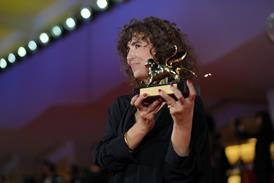
In particular, he hopes the picture’s awards nominations will help spread its message in Russia. “The Oscar nomination is impossible to ignore,” he says. “You have to mention it. You know, in Russia there are people who say that the Oscars is political; it shouldn’t be taken seriously. They say, ‘We don’t look at the Oscars, we look at Bafta.’ But we also have a Bafta nomination.”






No comments yet