
















Window-breaking streamer titles in cinemas, ticket pricing and uneven slate consistency through the calendar year were some of the hot topics discussed by the executive roundtable last week at the annual UK Cinema Association two-day conference.
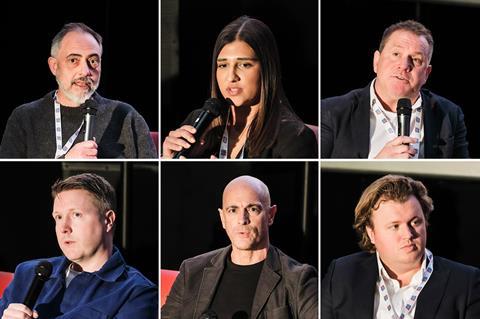
Two distribution executives – Craig Jones, director of theatrical sales at Disney, and Matt Smith, head of theatrical distribution at Lionsgate UK – were joined on Wednesday (May 13) by a quartet of exhibitors: Paul John Anderson, director of Omniplex Cinemas group; Serena Black, director of film at Everyman; James Jervis, director of PDJ Cinemas; and Jon Barranechea, director of business development at Picturehouse.
One thing that all six could agree on was their positive outlook on the 2026 box office, ranging from “optimistic, with a level of caution” to “very, very optimistic”. (This panel can only be reported without directly attributing quotes to participants.)
“This time last year,” said one participant, “there was a lot of talk about summer 2026 being a strong summer of blockbusters. What I didn’t hear last year was anyone saying Q1 looks like double-digit growth, and that’s what we’ve had.
“We’ve seen every film released this year – The Housemaid, Project Hail Mary, Michael, The Devil Wears Prada 2, The Magic Faraway Tree, The Drama – at the top end of any reasonable expectations. All of them were 10, 15, 20% higher than where they might have been.”
The speaker attributed this success to “a genuine shift in audience behaviour. More people are coming, new people are coming, and they’re coming more often.”
Streamer tactics
The panellists gave strong support to the 45-day or longer theatrical window that is now being respected by legacy film distributors for wide releases, as well as by the likes of Amazon MGM Studios, flying high with Project Hail Mary which was distributed by Sony. How cinema chains should respond to the window-breaking tactic of Netflix saw a divergence of opinion.
“With streamer titles, the criteria for them to get in [to our cinemas] is a lot higher than a regular release, if there’s a shorter window,” said one exhibitor.
“That means there has to be more urgency to see that film on the big screen. But there are times, and you have a Peaky Blinders [film], there is a huge audience demand to see that in a cinema, despite it having a two-week window. We want to be there for the audience to do that.”
“If we all say it’s 45 days, and then we have an exception, no matter how big or small, it confuses the customer,” countered another exhibitor. “We’re lucky if we can cut through and get that message to the customer that it’s a month and a half or two months before it goes on to streaming. If you have it appearing, say, 12 days later on Netflix, that’s a really confusing message.
“We didn’t show Peaky Blinders,” they added. “Our opinion was it was the wrong thing to do. I think it’s key that we all have a consistent message across the board.”
Netflix does not report box office, but one panellist revealed, “I won’t share the figures, but the jump from 2024 to 2025 was monumental. They’re looking at that, and I think they are now seeing the value that we offer. And just recently, they released the news about Narnia, which is going to get a full theatrical – that’s an amazing outcome. It’s progress.”
Greta Gerwig’s Narnia aka Narnia: The Magician’s Nephew is scheduled to release theatrically on February 12 next year, and stream on Netflix from April 2 – a theatrical window of 49 days.
Price point
Panellists also disagreed on ticket price. One panellist cited the cost of a pint of beer in London at £7.50. “The price of a cinema ticket, and the price of a pint, I think they’ve never been closer,” they said.
“What can you do for less than a tenner [£10/$13] for a whole night out? I think it’s great that we’re getting that new, younger audience. Gen Z, they’re not down the pub, they’re down the cinema instead, and we need to lean into that.”
“It is cheap relative to other entertainment, but I think the perception is that it isn’t,” offered another panellist. “I don’t think that’s just young people. I think there is a perception that it [costs] a little too much. This is where we all need to do more work on positioning our pricing relative to the value and the experience we offer.
“Because currently, if you pay £10, £15, up to £20 ($13-27) for a ticket, and perhaps the film isn’t as good as you wanted, and the experience overall is below what you hoped, that’s where the trigger of, ‘Oh, I got a little burned there’ comes from, which may deter a return to the cinema.”
Slate consistency
Bunching of titles creates challenges for cinema operators – during awards season for boutique operators, and at other pinch points for the plexes. However, pointed out one panellist, “The cinema estate is huge. The weekend just gone, we’ve had The Devil Wears Prada 2 and Michael both taking £5m-plus [$6.7m] and plenty of audience demand to come and see two completely different films at the cinema at the same time.
“We try and avoid bunching, but there are dates in the calendar which are so lucrative that you’re going to get bunching: February half-term, May half-term, Christmas.”
Another panellist celebrated the upside of bunching, for which 2023’s Barbenheimer remains the poster child. “We are going to get those pinch points,” they said. “We want to create that buzz, that noise, that excitement, and sometimes those pinch points do that.”
Barbenheimer was an outlier, said another panellist, voicing the perspective of operators with limited screens per venue.
“I don’t think that should be used as a textbook example of a bunching because we’ve seen so many examples where money has been left on the table. We had it just now with week two of Michael and The Devil Wears Prada 2. We should have had so many more shows of Michael, and if those films were not a week apart for us… it is important to get that spacing right.”
The UK Cinema Association’s conference, “Retention, Reach, Revenue – Growing Cinema Audiences” was presented at Vue Westfield in London on May 12-13.






No comments yet