













Young newcomer Mason Reeves also impresses in Beth de Araujo’s arresting second feature
Dir/scr: Beth de Araujo. US. 2025. 120mins
After witnessing a brutal rape, an eight-year-old girl tries to process the enormity of what she observed in the devastating psychological drama Josephine. Newcomer Mason Reeves is superb as the child whose innocence is shattered, causing her to act out and undergo a frightening emotional tumult. The second feature from writer-director Beth de Araujo (Soft & Quiet) has some of the trappings of a horror film as the titular girl starts believing that she sees the assailant all around her, but the picture deftly blends genres to create an arresting snapshot of the ricocheting carnage of sexual violence.
A humane and compassionate story
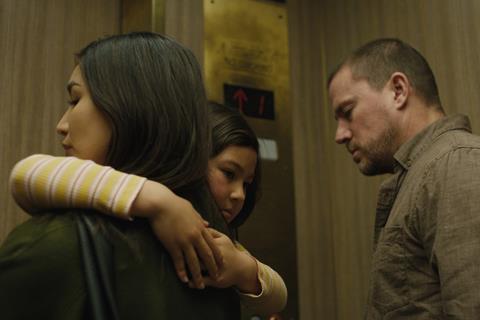
Premiering in Sundance’s US Dramatic Competition before going on to play Berlin competition, Josephine will benefit from the presence of Channing Tatum and Gemma Chan, who play the girl’s well-meaning but helpless parents. The tough subject matter may be a challenging sell, but strong reviews should bolster interest in this astutely-observed piece.
Josephine (Reeves) lives in San Francisco, and is enjoying a morning in Golden Gate Park with her sporty father Damien (Tatum), who preaches tough love and fighting through physical exhaustion in order to make her a better athlete. When they get briefly separated, she wanders by an outdoor restroom where a jogger (Syra McCarthy) is sexually assaulted by a passerby (Philip Ettinger) as the confused Josephine silently watches from a distance. Damien soon finds Josephine and discovers what has happened but, even though the man is quickly taken into custody, this sweet girl starts exhibiting behavioural issues, turning violent, panicked and sullen.
It does not take long for Damien and his wife Claire (Chan) to notice these changes in their daughter, but they have opposing views of what should be done. Damien insists she needs to learn self-defence so she will stop feeling afraid, while Claire believes Josephine should talk to a counsellor. Initially Damien gets his way, but it becomes clear that something has shattered within this girl, who sneaks her parents’ cellphone to look up what ‘rape’ means. (She overheard her parents using that mysterious term regarding what occurred in the park.)
Miles Ross’ mournful score, highlighted by a shivering cello, hints at the depths of the shock Josephine cannot begin to understand, let alone articulate. Much of the film’s drama rests on Reeves’ shoulders, and she is remarkable in the role. Her character’s silent face soaks up everything around her, although she doesn’t always learn the right lessons from her parents. (The overly protective Damien gives Josephine permission to hurt anyone who tries to make her do something she doesn’t want to do; guidance that will soon backfire in the schoolyard.) In no time, Josephine loses her sense of security, turning to toy guns and kitchen knives to feel in control.
De Araujo, who based this story on a similar incident she witnessed in childhood, incorporates occasional first-person POV shots so that we see the story directly from Josephine’s perspective. Used sparingly but effectively, the device only emphasises the impossible circumstance in which Josephine has found herself — especially once the D.A. needs more information from her in order to convict the rapist.
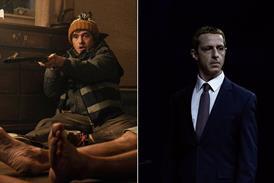
The filmmaker utilises other techniques to put us into Josephine’s traumatized mindset — like having Ettinger stand silently in the background of shots as a figment of her anxious imagination — and, while the strategy is sometimes overused, it elicits the desired response. Josephine is in no actual physical peril, but her unravelling psyche nonetheless places her in grave danger. Even worse, at too young an age she has become aware of the destructive power of sexual violence.
Tatum and Chan expertly convey two very different parental styles. Damien sees everything through the prism of mental toughness — a key component for any successful athlete, he believes — but Tatum illustrates how sadly unprepared the character is to deal with the delicate emotional fallout from this sexual assault. Claire is much more sensitive, but she fears scarring her daughter more by having an adult conversation about sex and rape with her. As much as Josephine laments what has happened to its title character, the film also becomes a portrait of two adults with conflicting worldviews who cannot see past their personal biases to help their child.
As Reeves hints at the physical harm Josephine might do to herself and others, Josephine flirts with familiar horror tropes involving the possessed or evil child. But this is a far more humane and compassionate story, placing the terror in a painfully real-world situation. This tense, raw film culminates in a crisp courtroom sequence that is utterly absorbing, suggesting how justice for the victims of sexual assault — including those who are merely bystanders to the crime — can be its own kind of horror.
Production companies: Kaplan Morrison, Vibrato
US sales: CAA, filmsales@caa.com; and WME, FilmSalesInfo@WMEAgency.com
Producers: David Kaplan, Josh Peters, Beth De Araujo, Marina Stabile, Channing Tatum, Gemma Chan, Mark H. Rapaport, Josh Beirne-Golden, Crystine Zhang
Cinematography: Greta Zozula
Production design: Tom Castronovo
Editing: Anisha Acharya, Nico Leunen, Kyle Reiter
Music: Miles Ross
Main cast: Channing Tatum, Gemma Chan, Mason Reeves, Philip Ettinger, Syra McCarthy