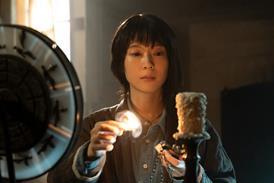








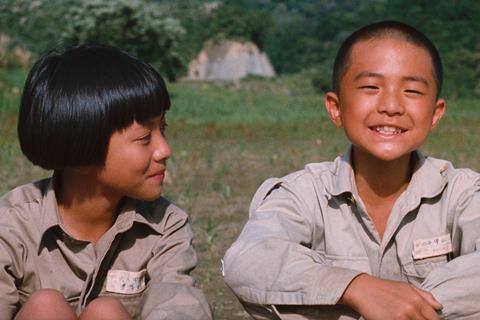
In a poll conducted by Taiwan Film & Audiovisual Institute (TFAI) in 2023, The Dull-Ice Flower (1989), which played in the Berlinale’s children and youth sidebar Kinderfilmfest’s 14plus in 1990, was voted the best Taiwanese feature of all time, beating many recent box-office blockbusters.
Adapted by Wu Nien-jen from a celebrated novel by Chung Chao-cheng, the heartrending drama portrays the short life of a child who gets low academic grades but excels in art. His talents were sidelined in school due to his family’s poor background and only received recognition after his death. It was shot by Mark Lee Ping-bing for director Yang Li-kuo.
A new 2K restoration of this perennial favourite is now available for the first time through the restoration efforts at TFAI. A further new restored title is 1987’s The Game They Called Sex, a rare female-driven drama directed by Sylvia Chang, Shaudi Wang and Roy Chin, and starring Maggie Cheung.
TFAI began digital film restoration in 2008 and had completed 7,147 advanced digital scans and 109 full digital restorations by 2025. Recent notable titles to be restored include the 4K version of Tsai Ming Liang’s Venice Golden Lion winner Vive L’Amour (1994) and the 2K of Liao Hsiang-Hsiung’s Tracing To Expo ’70 (1970), which premiered last year in Venice and Japan’s Osaka Asian Film Festival respectively.
Cause for urgency
This year is the 70th anniversary of Taiyupian (meaning Taiwanese-language films), a genre defined by the use of Taiwanese language in more than 1,100 local films produced between the 1950s and 1970s.
However, only around 200 of them are known to have survived, as a result of previous poor storage conditions, the absence of proper archival practices and the policy shift to promote the Mandarin language. With much of the legacy lost, there is an urgency to rescue and restore such classic films.
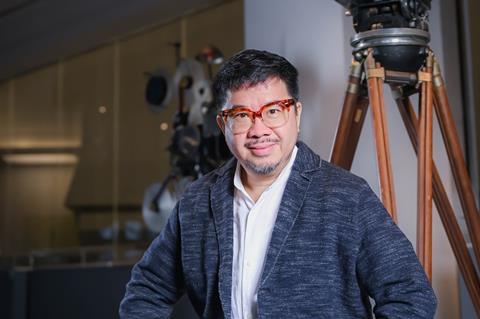
Since 2014, TFAI has been committed to the preservation of Taiyupian as endangered cultural assets as well as to reframing their place within Taiwan’s film history and the broader world cinema context.
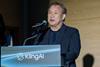
“TFAI has since restored 28 Taiyupian titles, each requiring extensive technical intervention and historical research due to the compromised condition of the source materials,” says TFAI chairman Arthur Chu. “What makes Taiyupian’s restoration urgent is not only the number of films already lost, but the fragile condition of what remains. Many surviving prints are affected by vinegar syndrome and are at risk of becoming irreversibly unplayable.” Vinegar syndrome is a form of chemical decay, usually caused by warm and humid storage conditions.
After more than a decade of research and restoration, TFAI is re-establishing Taiyupian — a once popular genre rich in diversity and cultural vitality, reflecting everyday life, regional identity and social reality in a bygone era more directly than in Mandarin-language films.
“Taiyupian is not nostalgia for us; it is a language-based cinema that carries lived experience and local identity,” adds Chu. “Our task is to bring these films back into contemporary and international circulation so they can speak to audiences today.”
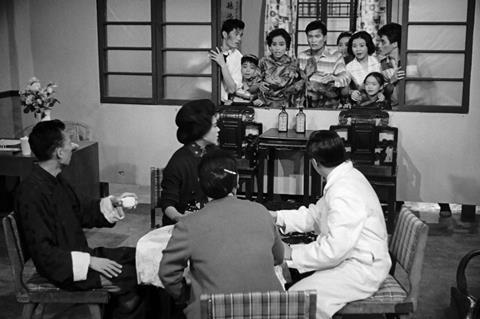
The 70th anniversary celebration is led by the new 2K restoration of three Taiyupian, including Good Neighbors (1962), an early work of late director Lee Hsing who went on to become known as the godfather of Taiwan cinema. Shot in black-and-white, this comedy drama vividly captures Taiwan’s multilingual reality through its playful mix of Mandarin and Taiwanese.
Shao Lo-hui’s Love Never Ceases (1962) stars Taiwanese singer Hong Yi-feng, known as the king of Taiwanese songs, while Hsu Shou-jen’s Zhang Di Seeks A-Zu (1969) stars Taiwanese opera legend Yang Li-hua.
All three films were produced in the 1960s, widely regarded as the golden era of Taiyupian, a period marked by high production output, rising budgets, star-driven popularity, and the development of genre conventions.
Celebration activities include international screenings with events planned in Singapore and Japan. They aim to introduce Taiyupian to audiences beyond Taiwanese-speaking populations and reposition them as an essential chapter of world cinema heritage.
Separately, four newly restored documentaries by veteran Taiwanese documentarian Lee Daw-Ming are added to the latest collection of TFAI. The world premiere of Beyond The Killing Fields: Refugees On The Thai-Cambodian Border, Voice Of The People, Songs Of Pasta’ay and Beyond The Anti-Dupont Movement: Portraits Of Some Social Activists will be presented at the 15th Taiwan International Documentary Festival (TIDF). It runs from May 1-10 as a biennial event hosted by TFAI for documentary cinema and public discourse in Taipei.
Contact: Erica Lin, TFAI
Find out more: tfai.org.tw/en