









“We destroyed a lot of people’s hopes last night,” said Thierry Fremaux, in his typically freewheeling preamble to the announcement of the titles chosen for Cannes Film Festival’s 2026 official selection yesterday. “We need love,” he added on a softer note, talking of the desire to select and platform films that bring people together.
Fremaux and festival president, an impressive Iris Knobloch, set the scene for the chaotic geopolitical global backdrop against which the team have chosen their titles. They were clearly mindful of not wanting a Berlinale-style crisis in which the debate about free speech on and off screen threatened to take over the entire festival. “Cinema doesn’t require us to agree. It invites us to be present,” as Knobloch put it.
Knobloch eloquently set out the festival’s position on artificial intelligence, commenting that “AI will never know how to feel”, and said of women filmmakers: “Cannes… must open the access, access to finance, access to projects, access to decision-making positions.”
However, there are only five films by women directors in the 21 Competition titles announced so far, down from a high (ahem) of seven in both 2023 and 2025. (James Gray’s Paper Tiger is the film Fremaux hopes will be ready in time to add so there is little chance of another female director joining the Competition. Judith Godreche’s A Girl’s Story may be added to the out of competition programme.)
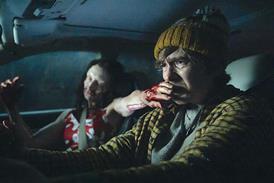
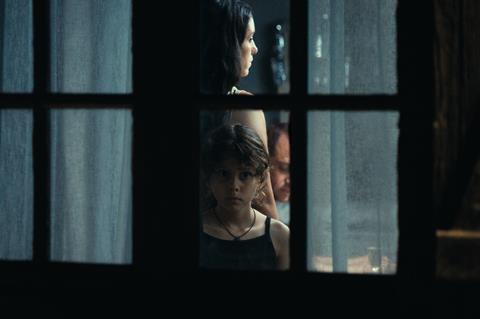
Of the five female directors in Competition, the industry had widely anticipated the presence of Lea Mysius (The Birthday Party), Marie Kreutzer (Gentle Monster) and Jeanne Herry (Another Day). German director Valeska Grisebach’s The Dreamed Adventure and French director Charline Bourgeois-Tacquet’s A Woman’s Life were both surprise inclusions.
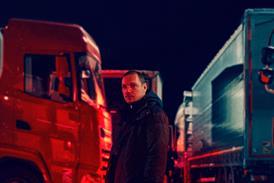
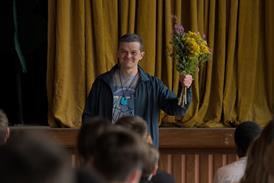
Along with perhaps Ira Sachs’ under-the-radar The Man I Love, they were arguably the only surprises of the Competition strand. The rest of the male directors are a strong, recognisable cohort of name and Cannes regulars, including Almodovar, Farhadi, Pawlikowski, Zvyagintsev, Kore-eda, Hamaguchi, Dhont and Nemes.
Along with the disappointing number of female directors and no Black directors at all, among the international filmmakers whose hopes may have been dashed last night were Sergei Loznitsa with Imperium, Nicole Garcia’s Milo and Felix van Groeningen’s Let Love In. They may yet turn up in Cannes Premiere, which seems short of a few titles, and Directors’ Fortnight and Critics’ Week, due to make their announcements next week.
And with no Ruben Ostlund, the Nordic film industry is lacking a title in Competition this year. Flying the flag for the sector is Renate Reinsve, the star of Cristian Mungiu’s Norway-set Fjord, while Her Private Hell by Denmark’s Nicolas Winding Refn is screening out of competition. No films by Italian directors have been selected for Competition but Italian production outfit Our Film is a partner on Pawel Pawlikowski’s Fatherland, starring Sandra Huller.
Similarly, the UK industry has been almost completely shut out of titles and filmmakers in official selection. UK-based Pawlikowski is the sole exception but the film is a Poland-France-Germany collaboration, with no UK producer involved.
Cannes’ sidebars are traditionally more amenable to UK filmmakers and hopes are high – rather than destroyed! – that Clio Barnard’s I See Buildings Fall Like Lightning and Shane Meadows’ Chork may still grace the Croisette yet.
Where the conversation in Berlin ended up grinding back and forth on one topic, Cannes is unlikely to face the same problem, partly due to the breadth of the programming, partly due to its sheer energy. This was personified today by Fremaux in the press conference, talking without notes, swinging between sections. As the audience in the Paris theatre and online scrambled to keep up, one YouTube commenter charitably wrote: “bro is a pro rambler”.
But if not perfect by any means, it is precisely this rambling spirit that is keeping Cannes vital and alive, and why it matters so much to the international film industry.





No comments yet