















Distribution’s most vital and creatively agile task is to connect films with audiences. Screen looks at Lionsgate’s recent success with its smash adaptation of The Housemaid

Some audiences for The Housemaid had a smashing time at the cinema in more ways than one.
In early research screenings of Lionsgate’s psychological thriller starring Sydney Sweeney and Amanda Seyfried, attendees were given china plates and encouraged to smash them at key moments during the on-screen action; crockery breakage is a recurring theme in the story of a live-in maid who gets tangled in her new employers’ twisted marriage.
The enthusiastic response – to the plate-smashing mandate and to the film itself – changed Lionsgate’s take on The Housemaid, originally set for a Christmas Day opening on the assumption its demographic would be most available after the pre-holiday rush.

“Those screenings flipped the switch on what this movie was,” says Kevin Grayson, president of worldwide distribution for Lionsgate’s motion picture group. “We started to see that the audience was actually younger, and [they were] going to scream from the rooftops that this was not only an unbelievable movie but very, very theatrical – something you needed to experience with a big group of people.”
The response led Lionsgate to bring the film’s North American release date forward to December 19 (when a younger crowd would be available) and prompted a marketing push that made heavy use of digital platforms, including millennial-favoured Instagram and Gen Z-friendly TikTok.
Pre-release screenings showed the film played as “a communal experience”, says Briana McElroy, Lionsgate’s EVP and head of worldwide digital marketing. “We know Gen Z is constantly searching for what they call ‘third spaces’ – places where they can experience things together. We knew that was something we needed to showcase in the campaign.”
“We identified creative for TikTok that felt unique and really spoke to that Gen Z audience,” she adds.
Mobile-phone footage from the plate-smashing screenings – overlaid with text reading ‘PoV me watching The Housemaid’ – was one kind of content captured for social-media exposure, and emulated by fans who attended screenings.
Another was fan edits: fast-cut assemblages of moments from the film set to a music track and designed to communicate emotion more than plot. Among the edits that went viral – some created by Lionsgate, some by fans – were those featuring the film’s brooding male leads (Brandon Sklenar and Michele Morrone), the ear-splitting scream unleashed by Seyfried’s character at one point in the story, and Sweeney’s “I need a fucking sandwich” moment.
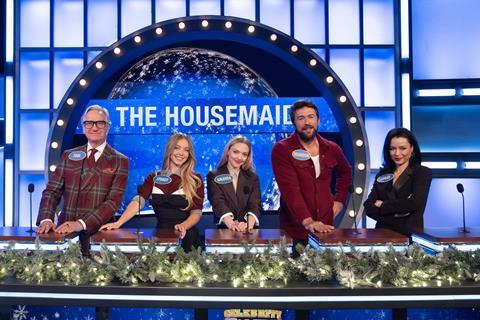
As themselves, Sweeney and Seyfried participated in content including a takeover of Instagram’s Close Friends feature, and an appearance with other cast members and director Paul Feig on ABC TV game show Celebrity Family Feud, which generated additional social-media clips.
Book club
Fast-growing TikTok sub-community BookTok, which as of last year had accumulated 370 billion views, became a central element of the campaign thanks to the popularity of Freida McFadden’s 2022 novel on which the film is based.
Four creators from the community were invited to the film’s set during production, capturing content and meeting McFadden and the cast. Other creators helped the push by ‘bedazzling’ the movie tie-in book cover online or by interviewing cast members on the red carpet.
BookTokers (as the community’s creators are known) “became vocal evangelists for us and championed the film from production through to our home entertainment campaign”, says McElroy.
“Our goal was to create very sticky content so that we could reach new audiences,” she continues. “In the end, we had done about 295 posts but across those we had amassed over half a billion views. And on TikTok, 88% of those views were driven by discovery, which means the content was so sticky it was being shared by non-fans and reaching a new audience.”

In the analogue realm, Lionsgate showed The Housemaid to North American exhibitors further ahead of its opening than the company does with most films, hoping for more than just a positive response to a strong upcoming release.
“We wanted that buy-in, but we also wanted them to collaborate with us on what they felt would be the best way to sell the movie,” explains Grayson. “It was a collaboration between exhibition and distribution.”

One exhibitor that got on board was Cinemark, North America’s third biggest cinema circuit with more than 5,600 screens in the US and South and Central America. Backing up Lionsgate’s efforts, says Cinemark chief marketing and content officer Wanda Gierhart Fearing, was a way to “amplify that momentum directly to our customers in a targeted and strategic manner”.
The circuit’s own initiatives included the creation of a quiz game with Sweeney and Seyfried that attracted more than a million views on TikTok, the use of the keyhole icon from the book cover and film posters in online seating charts, and kitting out cinema staff in The Housemaid-themed T-shirts.
The clothing, suggests Gierhart Fearing, helped to create an “experiential touchpoint [that] speaks directly to what younger audiences value in today’s experience-driven economy, which is impactful, memorable and affordable out-of-home entertainment”.
Finding its public
One potential challenge in marketing The Housemaid might have been the inherent risk associated with the social-media presence of a star whose visibility – Sweeney has 26 million Instagram followers – has created negative as well as positive attention. Last autumn, the disappointing performance of boxing biopic Christy had been blamed by some observers on lingering online criticism of the actress’s summer 2025 clothing ad for American Eagle (under the copy line “Sydney Sweeney has great jeans”) and her labelling as a “MAGA Barbie”.
But Lionsgate execs insist the ad backlash did not affect their efforts on behalf of The Housemaid. “The internet is a big place and it can feel loud in certain corners,” argues McElroy. “But the content finds its audience. We focused on putting the movie out for fans of the book or the genre, and we knew that audiences who were interested would find it.”
Box-office results confirm audiences did just that, in impressive numbers. Although it opened domestically opposite Avatar: Fire And Ash and The SpongeBob Movie: Search For SquarePants, The Housemaid took $19m over its first weekend in North America and held up remarkably well in subsequent weekends, achieving a 6.6 multiple to end up with $126m. In the international marketplace – with elements from the domestic marketing campaign emulated in the UK and Central America, where Lionsgate self-distributes, and made available to distributors in other markets – the film took more than $270m, producing a $397m global total that has made it Sweeney’s biggest success to date.
Now Lionsgate is planning a production start later this year on a sequel based on The Housemaid’s Secret, the second volume in the 12 million-selling book trilogy. The follow-up, set for December 17, 2027, will see Feig and Sweeney return as director and star, and welcome cast addition Kirsten Dunst. The film will benefit from the marketing momentum created by its predecessor, suggests Grayson.
“It’s a priority to get the next one out,” says the Lionsgate distribution head. “We’re going to be locking in a release date soon, because this became such a zeitgeisty title that [with the sequel] we get to jump on board and ride it out.”






No comments yet