









The scorching weather over the past few months has prompted local and international productions filming in France to rework their summer shooting schedules, rewrite budgets and requisition what seemed like every available air-cooling system in the country.
For independent producers with limited budgets and insurance policies that would not pay out for extreme weather stoppages or postponements, this meant finding safe strategies to keep the cameras rolling.
“We couldn’t interrupt filming. We just had to make it work,” says Frédéric Lussato, president and co-founder of Screen Line Productions, of shooting the TV film Meurtres à Fort Boyard in and around La Rochelle throughout June, with temperatures reaching 39C (102F) every day.
While warm weather during a European summer shoot is nothing out of the ordinary, “to have such scorching heat in May or June was completely unexpected”, as Lussato puts it.
The production for France Télévisions shifted its schedule to shoot very early in the morning and later in the evening to avoid the hottest hours of the day, stocked hydrating mineral water mists for the cast and crew to cool their faces and bodies, and placed fans throughout the set. While crew members could dress in lightweight T-shirts and shorts, the lead actresses were forced to spend most of the shoot in heavy police uniforms.
Also for France Télévisions, the six-part thriller Le Passe Muraille shot for 60 days across the Grand Est region, including five days in a 500-square-meter warehouse during the most intense stretch of the mid-summer heatwave. For producers Marathon Studio and Terence Films, the priority was keeping cast and crew protected from the heat, but they also had more than 5,000 flowers to try to prevent from wilting under the punishing temperatures, particularly beneath the warehouse’s heat-trapping corrugated metal roof.
“It was simply impossible to work under those conditions,” says Marathon Studio founder and producer Malika Abdellaoui. “We had two choices: stop shooting, which wasn’t covered by insurance, or find another solution.”
She opted for the latter, bringing in professional cooling systems to keep both the human and botanical members of the cast and crew safe and the shoot running.
France Televisions also shot the series Le Roman De Marceau Miller from mid-June through early August, spanning “all three heatwaves in a row”, as described by Isabelle Degeorges, president of producer Gaumont Television France. Set alongside Lake Geneva, the series shot in the Auvergne-Rhône-Alpes and Paris regions, both of which were among the areas hardest hit by the summer weather.
“We have the locations once we’ve booked them, and we have the actors when they’re available, so we had to keep going,” says Degeorges.
The production kept crews hydrated with a constant supply of water, electrolyte drinks and water coolers that they kept wrapped in emergency blankets. It also stocked high SPF sunscreen, ice, mineral water misting sprays, insect repellent for the swarms of mosquitoes around the lake, and spare caps for crew members to cover their heads, in addition to having an on-set paramedic.
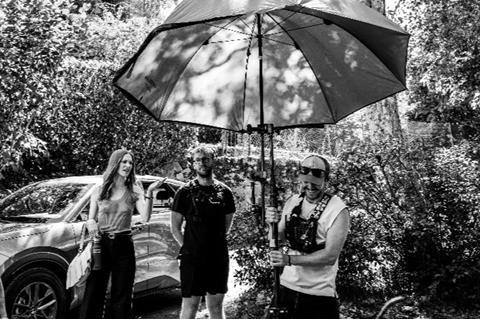
“We used giant umbrellas with UV protection to shield both our actors and the camera equipment and purchased air conditioners for the scenes we shot inside,” Degeorges recalls.
The production also lost three half-days of filming while shooting in the mountainous region, where soaring temperatures triggered severe thunderstorms.
Degeorges says there was one unexpected perk: “On one particularly scorching day shooting along the lake, we took a swimming break for anyone in the cast or crew who wanted to cool off.”
Filming in the fires
The hottest temperatures were recorded in the Bordeaux region, where France’s worst wildfire in decades raged and at least one production – for UGC Fiction – postponed filming for a week, according to the local film commission, Gironde Tournages.
The fires had been contained by early August and Maïté Sonnet’s debut feature Tu Feras Tomber Les Rois, produced by Ethan Selcer for Quartett, began shooting in the vineyards of the Bordeaux region. But when producers and crews visited the area just days ahead of the shoot, they feared they would not be able to film as planned. “There was smoke everywhere, everyone was coughing; it would have been impossible to film under those conditions. We were panicking,” Selcer revealed.
Although the air quality improved, several locations were lost to “black alerts”, the highest-risk designation for French forest areas, banning any human activity in proximity. To manage filming in the high temperatures, the producers devised a “heatwave plan” ahead of the shoot, including a temperature threshold above which filming would stop, particularly given the number of children and teenagers in the cast.
The producers also sought to ensure their on-set practices reflected the film’s wider concerns. “Tu Feras Tomber Les Rois is a film about the environment and the state of the world, so we wanted our production methods to reflect that commitment. It would be absurd to ask crews to work through dangerous heat,” Selcer said.
Sweaty in Paris
In Paris, conditions were gruelling for everyone living and working in the city this summer. To maintain team morale, Cinefrance Studios paid a “heatwave bonus” to every cast and crew member working on location on its latest (under wraps) feature during the hottest days of June and July, taking what producer Renan Artukmaç saw as a necessary hit on the budget.
They also scrambled to secure what they were told were the last two professional cooling systems available during the high-demand period for scenes inside a non-air-conditioned theatre and hired a paramedic to stay on set at all times – a precaution rarely taken on French shoots.
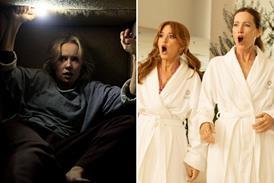
Season six of Netflix’s Emily In Paris was filming as the late June heatwave hit, causing schedules to be revised and planned outdoor sequences relocated to Studios de Montjoie in Saint-Denis. “We adapted our production schedule to spare our crews from the worst of the heat. We’re talking about the health and well-being of our cast and crew,” says executive producer Raphael Benoliel. “There is nothing more important than that.”
The team shifted daytime shoots to later hours, ensured constant access to water and ice on set, and brought in specialist companies to install cooling systems in interiors, including the Cirque d’Hiver, the historic circus venue in Paris’ 11th arrondissement.
Although filming permits in and around Paris are secured months in advance and come with strict regulations, Benoliel says the city was “very accommodating” when the production needed to make emergency schedule changes.
HBO series The White Lotus shot its fourth season in the south of France in May during some very hot days. Luckily, the infrastructure in the region is built to weather the heat, according to Valentin Françoise, the production’s line producer and CEO of Paris and Marseille-based Meadow Pictures. For exterior sequences, producers set up “fresh zones”, whether trailers, green rooms or large enclosed tents with AC inside. The series shot at Cannes’ Palais des Festivals and the Hotel Martinez, both of which have air conditioning.
Paris, however, posed more of a challenge. During late June’s peak heatwave, the production moved to the capital to shoot at Bry-sur-Marne Studios east of the capital, and interiors such as the Hotel Lutetia. Françoise says the team installed hundreds of cooling systems across sets, offices and studio spaces, as “there are no studios in the Paris area that naturally have built-in air conditioning”.
“French casts and crews are used to working without AC, but in America, it is absolutely essential,” he says. “Under these conditions – 35-40 degrees outside and even hotter indoors with hundreds of people on set – it became impossible to work without it.”
The surge in demand soon exhausted local supplies. “Every company in the region was depleted of its stock by the end of June, so we had to truck in more than 30 units from the South of France.”
A nurse was on set at all times – standard practice for large-scale international productions – with two or three health professionals brought in on particularly hot days or when crowd sizes increased. Beyond ensuring “water bottles everywhere,” producers sent nightly memos with heat-safety reminders to the entire team, encouraging regular hydration and protective measures such as covering heads.
The scale of streaming productions has added another layer of complexity: while local French shoots typically involve 50-80 cast and crew members, shows such as The White Lotus can gather 200-500 people at a time.
“We went through 90 water fountains of around 20 litres of water in one day alone, 1,800 litres of drinking water for just one day on set,” recalls Françoise.
The response to the extreme heat has underscored the different production cultures between France and the US. Generally speaking, in France, says Lussato, “budgets are smaller, there is less of a process, so we are used to finding creative ways to adapt. We don’t have a choice. We have to be more resourceful.”
Unlike major US productions, local shoots have less room to absorb extra expenses like cooling units and on-set paramedics. As Degeorges notes, even scheduling adjustments come at a price: “It costs more to shoot at night.”
Françoise suggests: “In France, the approach is, ‘We do what we can with what we have.’ In the US, it’s, ‘How much do we need in order to do what we need to do?’”
The producers to whom Screen spoke all said that while their productions all had to absorb the extra costs, it was achievable as long as the production stayed on schedule.
The road ahead
Producers are now thinking about how to reshape workflows and on-set protocols in the long term for what is shaping up to be the new reality for summer production in France and across Europe.
“Ask any producer, and they’ll tell you, ‘We know we have to find new ways of working,’ but no one knows exactly what that looks like. There’s no clear blueprint for responding to the climate crisis. We’re watching the world transform before our eyes, and we’re still figuring out in real time how to respond,” says Screen Line Productions’ Frédéric Lussato.
Since 2021, under the CNC’s “Plan Action!” public policy initiative, productions seeking CNC funding have been required to comply with strict protocols for greener on-set practices. From 2023, all productions have also been required to report the carbon emissions generated by their projects using approved measurement tools such as SeCO2 and Carbon’Clap. The Ecoprod Label certifies productions that meet a defined set of criteria for environmentally responsible filmmaking, assessed through a guidelines-based points system.
Producers say they are already considering how to negotiate insurance clauses to better protect against the financial risks of a warming climate, including what circumstances would trigger coverage.
On the one positive side, they have learned from the experience. “By the third round, we were ready! We had the material, the on-set paramedic – everything we needed. We’ll be more prepared in the future,” Degeorges affirms.






No comments yet