











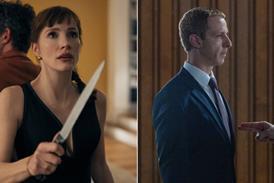
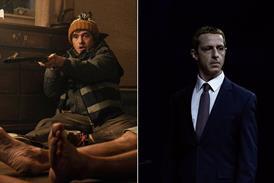




The creator economy has unleashed a new wave of fan‑supported talent — and it’s one that is increasingly interested in creating stories for the big screen. Screen reports on a vibrant new filmmaking sector.
It was late January at the weekend box office and the industry was focused on the imminent arrival of Sam Raimi’s new horror tentpole and Amazon’s documentary about First Lady Melania Trump.
By the end of the January 30-February 1 session, Raimi’s Send Help had indeed opened top of the charts. However, the name on everyone’s lips in Hollywood was Markiplier, whose horror debut Iron Lung had landed in second place in North America (and fourth worldwide), shunting Melania to number three.
Film industry professionals unfamiliar with the 36-year-old American, also known as Mark Fischbach, scrambled to learn more about the upstart filmmaker. Online, he needed no introduction to the tens of millions of fans that watch him play video games and enjoy his scripted podcasts and interactive films.
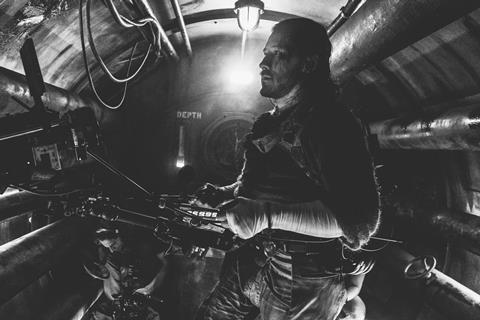
So when Markiplier wrote, shot and starred in a videogame adaptation about a convict inside a treacherous submarine and summoned his followers to turn up to their local cinemas, they duly obliged. After trying in vain to secure a distribution deal for his horror feature, Markiplier opted to self-distribute. Iron Lung opened on $17.8m in North America and $21.5m worldwide, and has gone on to gross more than $50m on a budget believed to be in the region of $3m.
Markiplier is reported to have earned more than $40m to date and resides within the $250bn-plus creator economy ecosystem, whose high-earning poster children include influencers such as MrBeast, Jake Paul and Alex Cooper. He is at the vanguard of an emerging sub-section of cinematic creators whose content overlaps with Hollywood and have already collaborated with studios on digital and social marketing campaigns.
Several years after Australian YouTubers Danny and Michael Philippou broke out at Sundance 2023 with Talk To Me, an emerging cohort of enterprising ‘Zoomers’ (aged up to 29) and Millennials (30 and up) who love the big screen are bringing their highly stylised sensibilities and similarly aged fans to cinemas.
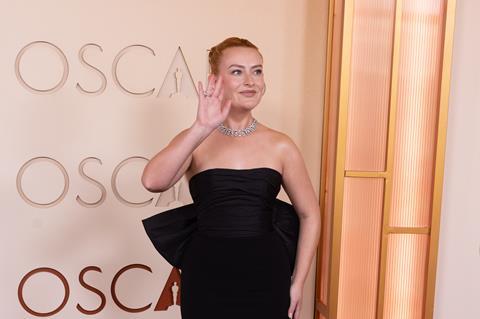
Amelia Dimoldenberg, the British YouTuber and star of Chicken Shop Date who last month completed her third stint as the Oscars’ social media ambassador and red-carpet correspondent, is developing a romantic comedy for Amazon MGM Studios’ Orion Pictures about a reporter whose life unravels when a celebrity interview turns into romance. Will Ferrell’s Gloria Sanchez Productions is the producer.
Kane Parsons (aka Kane Pixels), A24, 21 Laps and Atomic Monster are in post-production on the creator’s feature version of his “creepypasta” found footage YouTube webseries Backrooms that earned 72 million views over four years. The feature stars Chiwetel Ejiofor and Renate Reinsve, and opens on May 29.
A24 executives are betting on Parsons, 20, as a filmmaker with long-term career prospects — just like the Philippous and Norway’s Kristoffer Borgli, who was making short films online before he moved into features like A24’s new release The Drama, Sick Of Myself, and Dream Scenario.
Chill seekers
May is shaping up to be creator horror month. Focus Features will open Obsession on May 15 in North America (Universal Pictures International distributes across most of the rest of the world) after shelling out a reported $14m for worldwide rights at last year’s Toronto International Film Festival. YouTube and Instagram horror and comedy creator Curry Barker’s feature debut was the festival breakout and follows a young man who makes a wish that his crush falls for him.
Heading into Toronto, Kiska Higgs, Focus Features president of production and acquisitions, and her team were doing their due diligence as they scanned the line-up for potential genre pick-ups. “Curry to us was just a fresh filmmaker,” Higgs tells Screen International. “Until our head of distribution Lisa Bunnell said her college-age son was obsessed and knew exactly what Milk & Serial was.”
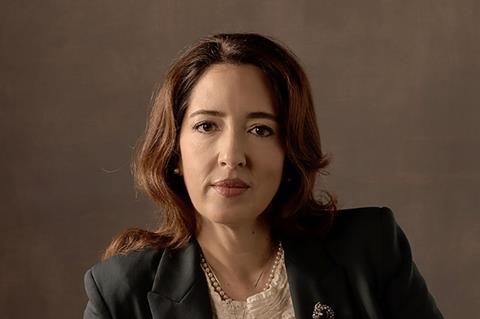
The reference to Barker’s $800 hour-long YouTube horror film was enough to ensure the Focus team duly assembled at the Royal Alexandra Theatre alongside buyers from Neon and A24. “We went out in force and we immediately loved it,” recalls Higgs. “The quality was apparent right away, and the mixture of humour and horror are perfectly calibrated.
“On top of that, it speaks to a cross-generational theme, which to me is a Pygmalion [story], which is what happens when a man has an idea of a woman and that turns into his worst nightmare. That is a tale as old as time, and that is what makes it a Focus film.”
The executive has been impressed by Barker’s vision and what the film’s producers told her about his way of working. “He definitely seems to operate without dogma, but has a really clear plan,” says Higgs. “He shoots fast. He shoots options. He gets a lot of takes. In that way, he’s a dream for low-budget filmmaking, because he knows what his vision is. The more voices that we can hear from a broader swath of society, the better.”
Given that creators can continue to please their fanbase with online content, their theatrical ambitions might seem surprising. However, as Barker’s literary agent Jordan Lonner at UTA explains, the allure of cinema straddles generations. “There’s still a romance to making movies,” says Lonner. “For younger filmmakers, a theatrical release is still incredibly appealing — even in a world where they could arguably make as much, if not more, by staying on their digital platforms.”
Barker is now very much on Hollywood’s radar, through his Instagram sketch comedy series That’s A Bad Idea and found-footage horror Milk & Serial, and he is not resting on his laurels. At time of writing, the Obsession writer/director was filming his feature follow-up Anything But Ghosts with Blumhouse Pictures and Roy Lee’s Spooky Pictures.
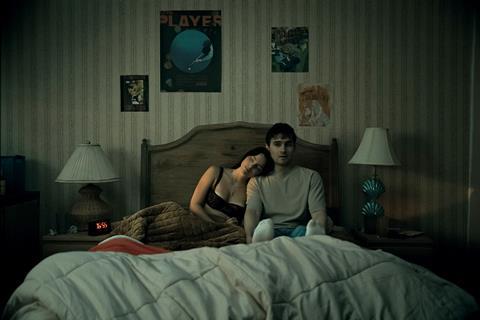
“This is a real filmmaker with a real command of long-form storytelling,” says Lonner. “What stood out was seeing his sketch audience genuinely follow him into his first feature, Milk & Serial, and stay there. That crossover doesn’t always happen, but it did, and with Obsession his craft reached another level.”
Lonner recalls audience members at the Toronto premiere chanting Barker’s name from the balcony. “The traditional Hollywood world didn’t understand the devotion and impact of his audience until that moment,” he notes. “There’s still a gap in how the industry understands these creators, and we’re helping to close that.”
Vibe shift
Barker’s commercial agent Ty Flynn works in UTA’s creators division and is also on Markiplier’s team. Flynn has seen a shift in strategy among online creators over the years. “There was a moment where it was as if all the Viners [Vine was the appropriately short-lived six-second video app that ran from 2013‑16] wanted to be on film and TV, get that SAG card and feel validated by the system. And then there was a moment when the Emma Chamberlains of the world [a US vlogger] said, ‘No, it’s cool to be a YouTuber. You can make a business here.’
“Now, I would say there is this push again towards creators owning their content and licensing it, or having it be a part of the traditional Hollywood ecosystem in a way that was different than just [being] an actor for hire or an idea for hire, back in the day.”
Markiplier worked with Sam Herting and his father Bill Herting of booker/theatrical buyer Centurion Film to find cinemas for Iron Lung in North America. The executives originally suggested a narrow launch in 10-20 venues, but Markiplier insisted they go wider so they secured initial bookings from 51 independent cinemas.
“That was difficult because the YouTube model had not been proven,” recalls Sam Herting. Markiplier dropped his trailer on December 5, the day tickets went on sale, and called on fans to visit the official website and request the film play at their local cinemas. “Man, did Mark’s fans prove him correct,” says the executive. “It absolutely exploded at that point.”
The three largest North American chains — AMC, Cinemark and Regal — booked the film within a week of the trailer drop and the theatre count ballooned to more than 1,000 runs. By the film’s release on January 30, it was at more than 3,000 theatres for North America and more than 4,000 worldwide.
People were contacting Centurion to say they had never seen anything like it. Bill Herting notes, “Some of the exhibitors were sceptical the requests were coming from bots, because there were so many. They weren’t bots, they were the real deal.”
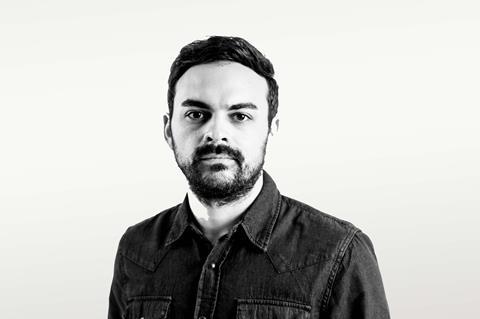
Iron Lung has grossed around $41m in North America. As for the revenue splits, Bill Herting says: “I think he’s very happy. We’re very comfortable. We were aggressive because we knew we had the fans on our side.” Centurion brokered distribution deals with Piece of Magic to distribute across Europe, and distributors such as Shear Entertainment to handle the UK.
James Wallace, Regal Cinemas director of alternative content, worked with Markiplier to create 3D-printed popcorn buckets, fan events and Q&As. The team also galvanised the fanbase to participate in blood donation drives (Markiplier has estimated that he used 80,000 gallons of fake blood during production of Iron Lung).
“What’s incredible about working on these content creator events is you’re actually getting to work with the content creators,” notes Wallace. “You’re getting to work with the people who know this art better than anyone. They know their audiences and that’s where we get to be collaborative.” Among Regal’s upcoming creator collaborations is the self-financed buddy comedy Busboys, opening in 30 sites on April 17 from comedian David Spade and podcaster and co-writer Theo Von.
Talent development
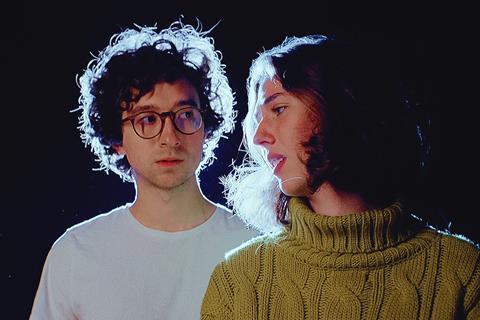
Texas-based YouTube creator Max Reisinger also relied on followers to support the November 2025 release of Baron Ryan’s low-budget drama Two Sleepy People from Creator Studios, the production and distribution arm of the digital-native media company Creator Camp that the 22-year-old Reisinger set up with co-founders in 2021.
Creator Camp has corralled 300 global creators with a combined following of 3 billion, and reinvested money earned from producing social-media campaigns for the likes of Coca-Cola and Spotify into producing eight shorts. “There’s talent on the internet but they lack resources in funding and infrastructure,” says Reisinger. “We wanted to give them small cheques to make their first projects. If they were good, we would develop them further based on how their audience reacted or whether we thought they had potential.”
Reisinger and his fellow executive producers on Two Sleepy People expanded Ryan’s short into a feature about colleagues who each day go to bed as spouses and wake up as strangers. The $100,000 production took place in and around Austin, Texas in February 2025 and Reisinger collaborated with the distribution marketplace Attend.
Founded by former National Association of Theatre Owners (now Cinema United) leadership John Fithian, Patrick Corcoran and Jackie Brenneman, who now also serves as president and CEO of the Independent Film & Television Alliance, Attend connects filmmakers to cinemas. The group booked sites, working with data from Camp Creator followers who wanted to see the film in their local venues. Two Sleepy People opened in late 2025, grossing a modest $300,000 in three weeks from more than 100 venues at its highest point. Regal Cinemas, Alamo Drafthouse and independents carried the film.
“We made three times the production budget, so that alone is a great start,” says Reisinger, adding that Ryan got a 40% cut of the sales after the exhibitors received their share and Attend took its fee. Most of the marketing ran at almost no cost through the Instagram accounts of Creator Camp and Two Sleepy People.
Creator Camp produced a series on Instagram showing how they were distributing and marketing the film. When audience members reported they had broken up after watching the picture, Reisinger and his team pivoted and challenged couples to watch the feature and stay together.
“We took that [demand] data to theatres and said we needed theatres near [specific] zip codes,” explains Corcoran. “One of the things we learned from this is a single showtime in about 50 theatres on Friday night in the theatres we targeted did a lot better than in the theatres we got that didn’t fit the target zip codes.
“Part of our thesis for Attend is we want to match resources with ambition. We want filmmakers to know that the responsibility for creating and marketing and distributing their movie comes from them. They have to build that community, the budget… you cannot rely on somebody giving you a cheque that makes you whole, because nobody does that right now.”
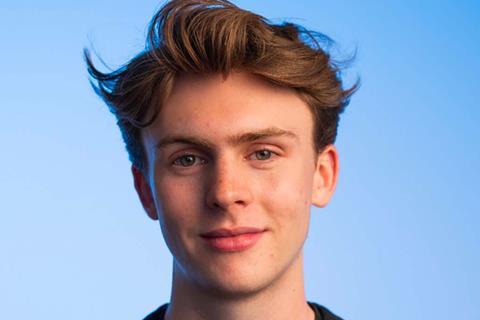
Reisinger built his reputation garnering millions of followers for his YouTube coming-of-age posts, and echoes the sentiment. “Growing up as a creator and having my career start there gave me a distribution-first mentality where I was already reaching people,” he says. “With the independent film industry, you’re focused on making the product; the distribution is more of an afterthought.”
In February Reisinger flew to the European Film Market in Berlin and met with mk2 and other international distributors to discuss a potential global rollout of Two Sleepy People. “Because we have momentum behind the film already and so much data on the audiences,” he says, “it makes their life easier because we have emails and zip codes and know exactly what the demand is like across Europe.”
The principals of the privately owned Creator Camp want to carry on making features and are relocating to New York this summer. Reisinger and his cohorts are also looking at finished films that come their way, and to that end are fielding enquiries from producers of unsold 2026 Sundance premieres. “Films that would have gone the traditional path aren’t finding a home, and so they’re looking to people like us as an alternative pathway,” says Reisinger.
Next gen media company pocket.watch says it released the first theatrical film by a creator in the form of Ryan’s World The Movie: Titan Universe Adventure in 2024. Since then, founder and CEO Chris M. Williams has seen a perception shift.
“The sentiment around creators in mainstream media has changed dramatically over the last few years,” Williams says, adding that even though the family film was based on pioneering YouTube “kidfluencer” Ryan Kaji’s Ryan’s World channel, an Emmy-nominated series and consumer products, the company still needed “to move mountains” to convince Hollywood the film could work.
Ultimately pocket.watch self-distributed the feature and Williams says it has thrived on Hulu. Since the release, perception among of the value of creator IP and their base has “changed drastically” in the film industry. Pocket.watch distributes an array of creator content and as of last month had 42 titles and 587 episodes on on Hulu and Disney+. “Our basic thesis, which we have proven time and time again over the last eight years, is that if it works on YouTube, it will work everywhere,” he says.
As Regal’s Wallace sees it, the ongoing engagement between Hollywood and online entrepreneurs and their followers illustrates an instinctive mutual understanding and appreciation of the power of filmgoing. “It’s a perfect blend of the very modern concept of content creators with an institution like the movie theatre,” he says. “After 100-plus years in existence, it’s still seen as this important place to come together and connect in a shared experience.”






No comments yet