



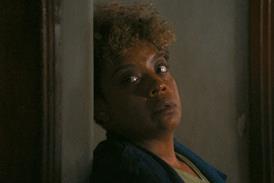







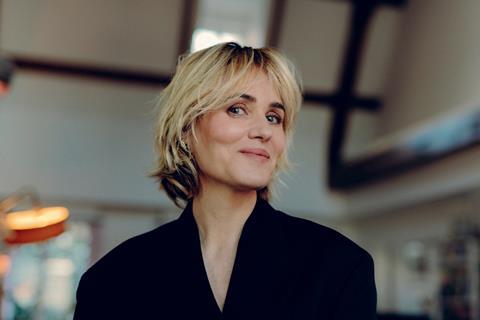
A key figure in France’s MeToo movement, Judith Godreche is back in Un Certain Regard with her debut feature A Girl’s Story (Memoire de Fille), after premiering her short Moi Aussi in the section two years ago. The film is based on Nobel prize-winning author Annie Ernaux’s autobiographical novel and stars Godreche’s daughter Tess Barthélémy as the young author in 1958 when she leaves her village to work at a summer camp, where she is seduced by the head counsellor.
A Girl’s Story had its Cannes premiere on Saturday (May 16). It is produced by Carole Lambert at Windy Production and Marc Missonnier of Moana Films, with Paradise City Sales handling sales.
What drew you to Annie Ernaux’s novel?
There is a reason Annie Ernaux is a Nobel Prize-winning author, what she writes is absolutely universal. It is so impressive how modern her writing is and how impactful it is, particularly for younger generations. Her themes of bullying and wanting to fit in are still so relevant today.
How did you tackle the task of adapting the book?
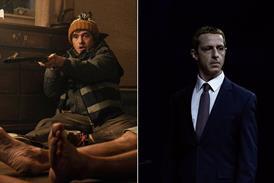
The challenge was finding a way to film this idea of a nonconsensual encounter – it isn’t ostensibly cinematographic. I watched several films to draw inspiration like Andrea Arnold’s Fish Tank, Barbara Loden’s [1970 drama] Wanda and, in a different genre, the series Adolescence. The story is more about a young person who wants to be a part of something and experience the idealised version of life she has read about in books. It’s not just a movie about sexual abuse. It’s a deeply feminist film.
What makes it a feminist film?
I am of course a female director, but I asked myself: how can I use the camera as a feminist weapon? How can I film the violence and harassment so that the protagonist is never objectified by my gaze? I wanted to tell this story without making it erotic at all. The only way to do that was to constantly take the protagonist’s point of view.
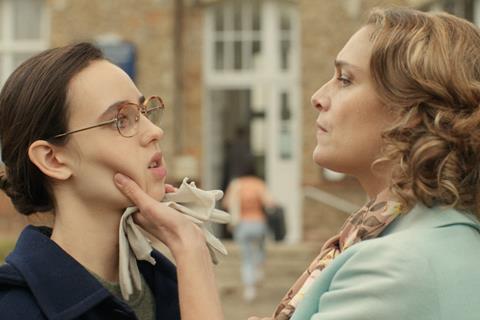
Your real-life daughter Tess Barthélémy plays the protagonist in question. Was she always your first choice?
I thought about her, of course, but that came with questions and somehow made her casting even more challenging. When I was directing her, I was always directing an actress, not my daughter.
It must have been a challenge to direct her in the sexual assault scenes in particular.
The set was a very safe space. We worked for weeks before shooting with an intimacy coordinator and an acting coach who were always on set, along with a representative from the CFCV [feminist collective against rape] who were a resource for our young cast. We rehearsed everything. It was so important to me that the story of a woman shouldn’t be told by a dude looking at her.
Did you consult with Annie Ernaux on the project?
I consulted with her every step of the way. I spent hours and hours talking to her, writing what she was telling me because in a way, the destiny of the character was also her destiny as a writer. I didn’t want to make a biopic, but somehow it is because it’s the story of how she became a writer, how she emancipated herself, how she found her own voice. It’s the story of women of that time and their fight for rights.
The film is set in 1958 France. How did you recreate this period while keeping the story relevant to modern audiences?
I wanted to make a modern movie even though it takes place in 1958. With a budget under €3m, we couldn’t make a heavy period piece and rebuild streets. We shot in Normandy, where Annie grew up; in Rouen, where she studied; and in Paris.
You’ve been a key figure in France’s #MeToo movement. Do you think the industry has changed for the better in the past few years?
Things have changed, but not because of me. I’m the one who has perhaps been more vocal and mediatised, but people have been working behind the scenes and fighting. I think some things have changed for the better, but in France, there is and will always be an aristocracy in our roots that isn’t going away in the sense of who is the most important and who is the least important in the hierarchy. In the French industry, we need to be more unionised like SAG, the DGA and the WGA in the US.
What do you hope audiences take away from the film?
I hope they are empowered and feel capable of things they thought they couldn’t do.





No comments yet