







Living In Our Heads, the next project from the Danish filmmaking team of the Bafta and Oscar-winning My Nobody Against Putin, was one of the big talking points among participants at this year’s CPH:Forum, the financing and co-production event of the Copenhagen International Documentary Film Festival (CPH:DOX) that took place last week.
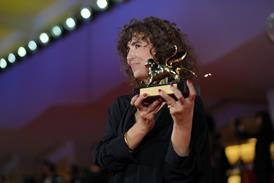
But coming just days after the Danish filmmakers won the Oscar for best documentary feature on March 16, in Los Angeles, director David Borenstein and producer Helle Faber of hometown outfit Made In Copenhagen, did not pitch their new collaboration publicly onstage at CPH: Forum as planned, preferring private meetings away from the spotlight.
Details of the project were kept under wraps, suggesting it will be another politically sensitive film. Mr Nobody Against Putin was about a Russian schoolteacher who bravely shed light on the indoctrination of the country’s children. Co-directed by the film’s protagonist Pavel Talankin, it was backed by the Danish Film Institute and a patchwork of multiple European broadcasters, NGOs and national film institutes. Nr Nobody screened in the Highlights section of last year’s CPH:DOX.
Living In Our Heads was one 30 projects presented to an audience comprised of international financiers, sales agents and co-producers at the Royal Danish theatre auditorium.
Borenstein’s decision to forego his slot is not that unusual at the documentary festival. Mara Gourd-Mercardo, CPH: Dox head of industry and training, said almost every year the Forum selects projects with themes and/or characters set in parts of the world where there are security concerns for the filmmakers and/ or the subjects.
“Those projects are confidential. Confidentiality fluctuates between the moment of the selection and the actual day of the pitch as most are in very volatile situations,” noted Gourd-Mercardo.
Organisers invite projects into the space knowing changes may occur quickly. “We take the teams and the subjects’ security to heart and very seriously and create a space with the flexibility to adapt to the situation.”
In fact, two years ago, Mr Nobody was also a confidential project and did not pitch from the stage.
This year, Syrian documentarian Talal Derki also chose to forego the stage presentation for his new film Last Standing Women.
Highlights
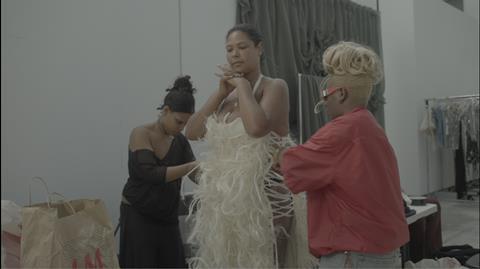
Among the projects that pitched from the stage and caught the eye of the audience was Last Weekend In October, the Forum’s first project from Nigeria by Emmy-nominated filmmaker Nosarieme Garrick and producer Chioma Onyenwe. Depicting Nigeria’s fashion scene, the verite documentary follows the lives of designers, artisans and a hidden seamstress as they aim to reach the catwalks of Lagos Fashion Week.
Set up as a US-Nigeria co-production, Onyenwe, the Lagos-based producer, director and founder of Raconteur Productions, is looking to raise the budget for Garrick to stitch the film together from footage already shot.
“I want it to be a film that isn’t just destined for fashion TV channels,” Onyenwe explained. “We want the film to bring the chaos of Lagos and the behind-the-scenes fashion workers to the world.”
Another project to particularly pique audience interest was Roisin Agnew’s docu-drama Blackest Ever Black, produced by Northern Ireland filmmaker Alison Millar (whose credits include Lyra) and Jack O’Brien of Sixteen Films. In early development, the film aims to portray a film crew setting out to make a film about data centres and Ireland’s tax system, whose efforts are derailed by budgeting errors and a series of blackouts.
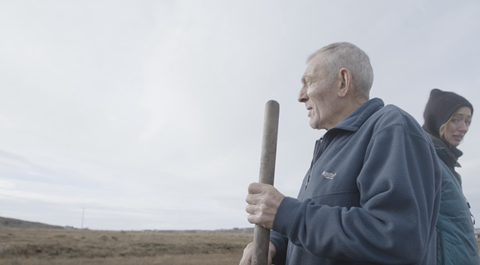
Miller explained it will combine real interviews and vertical videos with staged segments to portray big tech leaders’ reactions to questions around their operations in Ireland. The aim is to produce a film that blends absurdism, traditional documentary footage and a healthy dose of humour.
Chinese-born, US- based filmmaker Hansen Lin’s Queens
Ballroom also attracted industry interest. The film is set against an almost invisible Chinese community of Asian American immigrants who gather in a ballroom in the Queens borough of New York City, to dance and romance.
The audience was also enthused by a project with the working title of Untitled UNRWA Archive Documentary, directed by Canada-based Benedict Moran and Ramzy Hadda, and produced by Moran, Hadda and Sergeo Kirby. The film will combine archival material and interviews to detail Israel’s assault on the files and documents of generations of Palestinians, in a portrayal of memory as an act of resistance.
The industry programme closed on March 19 with an awards ceremony that presented over €100,000 in prize money to projects from its various sections.




No comments yet