








It Was Just An Accident pivots from revenge thriller to a humanist study of modern Iran. Jafar Panahi tells Screen what drives his filmmaking choices.
Jafar Panahi found jubilant crowds waiting for him at the airport when he returned home to Tehran last May, after winning the Palme d’Or in Cannes for It Was Just An Accident. “The people who were there were either from the film circles, or they were political prisoners who had been released, or they were families of political prisoners. Some of them were family members of our team, just regular people,” says the Iranian director, recalling the “collective sense of happiness” everyone felt on that day.
The mood was one of celebration even if messages of congratulation from the Iranian government were in notably short supply. In fact, the director remembers, “perhaps it was because of this sense of enthusiasm that people showed at my arrival that the state media started to attack me way more than before. They always try to do some character assassination – to destroy the joy and to belittle it.”
If there are scores of positive reviews of one of his films but one or two that are hostile or ambivalent, notes Panahi, the government will always highlight the negative criticism – and then try to claim that nobody abroad actually likes the filmmaker’s work.
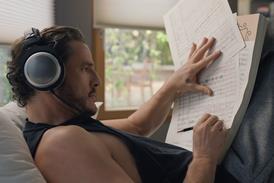
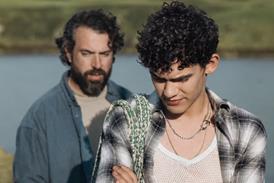
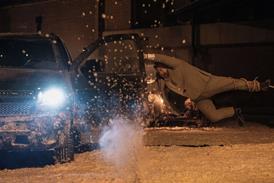
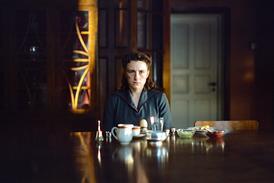
It Was Just An Accident – for which Neon has US rights and Mubi has multiple international territories including the UK – is produced by France’s Les Films Pelléas, in co-production with Luxembourg’s Bidibul Productions and Iran’s Jafar Panahi Film Production. It is a quintessentially Iranian story, about a group of former political prisoners who kidnap the man they think is the brutal guard who had tortured them – nicknamed ‘Pegleg’, and audibly recognisable even to blindfolded prisoners thanks to his distinctive gait. Panahi, though, is representing France, not Iran, in this year’s international Oscar race.
When Panahi won in Cannes, the French foreign minister described the movie as a symbol of resistance against the Iranian regime. Cue the inevitable diplomatic spat, with Iran summoning the French envoy and complaining about the “insulting” remarks. There was no chance the Iranian government was going to name Panahi’s feature as their official submission for the international feature Oscar – but, thanks to France, it is in the running anyway.
“Of course, I really wanted my film to be sent by my own country, but this didn’t happen,” sighs the director. “I send my films very easily to Cannes, Venice and Berlin. The government cannot get in between because it’s not part of the regulation of these festivals to have the government involved. But when you want to present your film to the Academy, then you must go and beg to the government, and this is contradictory to the nature of independent cinema.”
Panahi, now 65, is not the begging type. He has certainly had his share of dark moments, though. In 2010, he was sentenced to six years in prison and banned from filmmaking and travel. He reacted by making his films underground instead.
Humour in adversity
It Was Just An Accident deals with trauma, torture and state oppression, and yet, like most of the director’s work, it is a wry, character-based drama that takes a philosophical approach towards government oppression.
“This regime has been trying for over four decades to impose on Iranians tragedy, tears and suffering [but] the Iranians always come up with humour and jokes,” he says. “This is something really amazing. No matter what new disaster happens in Iranian society, the minute after, people come up with the most witty jokes about it. For me, this is a sign of the Iranian mentality. I want my films to reflect all the complexities of the Iranian soul.”
In authoritarian systems, he adds, there is also financial corruption. The seemingly comic scene in which a security guard pulls out a contactless machine to accept a bribe is partly inspired by real life. “I remember one day driving down a road and a kid came and started to wipe the windshield of my car. I told him nobody carries cash these days and he pulled out a credit card machine and said, ‘No problem!’ These things do happen, and we bring versions of them into the film… if these moments of humour are not in the film, then the film is not as believable.”
Another reason to include such levity is “to make the film more tolerable for the audience”. However, he adds, “In the final 20 minutes, I didn’t have any humour because I wanted the audience to be totally involved.”
Panahi describes himself as a humanist, and It Was Just An Accident ultimately ends on a redemptive note. “Socially engaged films are focused on humanity so, of course, you are against violence,” he says. “What matters is to create a question in the mind of the audience about whether this cycle of violence is going to continue, or if it’s going to come to an end at some point. I know that’s idealistic but it’s the way I look at it.”
Late on, there is a remarkable scene where the alleged prison guard Eghbal (Ebrahim Azizi) is tied up in the dark. His captors must decide whether to kill him or let him go.
“The actor had to be extraordinary for the scene to work because he was blindfolded, his hands were tied, and his torso was tied to the tree,” says Panahi. “I did a few takes of this shot one night and it was not coming together. I kept asking myself why I couldn’t get what I wanted. I realised the problem was not the actor, the problem was me, because I didn’t know the character of the interrogator well enough.”
The director then turned to a friend who had spent almost a quarter of his life in jail, brought him on set and asked him “to explain all the details of this character’s personality to the actor. I wanted him to say, based on his experiences, when these interrogators speak with authority, when they soften, when they humiliate, and when they give up.”
After this briefing, Azizi went on to give a “stellar” performance, says Panahi, who marvels at how expressively his actor played the scene despite being blindfolded and tied up. “The way I imagined it, the entire burden of the film was falling on this one sequence and if it wasn’t coming together, the entire film could fall.”
Eghbal might be described as the film’s villain, but he has a pregnant wife and a precocious young daughter (played in appealing fashion by Delmaz Najafi). “Casting correctly is more important than performance or acting,” says the director, when it comes to working with children – as he has been doing since his Cannes Camera d’Or-winning debut feature The White Balloon 30 years ago. He was introduced to Najafi by one of the cast members. “She sent me a video, and I saw she was comfortable in front of the camera and also playful.”
Home front
Panahi is determined not to follow other Iranian filmmakers into exile, despite his vexed relations with the authorities. Twenty-four hours after winning the award in Cannes, he was back home in Tehran. He attended Sydney Film Festival a few weeks later and was stranded briefly by the outbreak of the 12-day war, as Israel bombed Iran’s nuclear facilities. However, he went straight home as soon as flights resumed. “I don’t have the ability to live outside Iran. I cannot adapt myself,” he explains.
Panahi is speaking to Screen International a few days after being interviewed on stage by Martin Scorsese at New York Film Festival. The US filmmaker, says Panahi, is someone he reveres, “an important and respected person, not just in my country but all over the world”. He cannot help but add that he does not have the same respect for “any authority. By authority, I mean governmental and political authority, and it doesn’t matter whether they are in my country or anywhere else in the world.”
The restrictions on Panahi making films and travelling may have lifted, but he has no plans to change his approach. “No matter if I’m banned or not, I do not wish to make the kind of films they want me to make,” he declares. “I can’t follow the formal or legal way of filmmaking. I want to make the films I feel necessary to make.”





No comments yet