









The Austrian filmmaker’s follow-up to ‘Favoriten’ premieres as a Berlin Special Screening
Dir/scr: Ruth Beckermann. Austria/Italy. 2026. 97mins
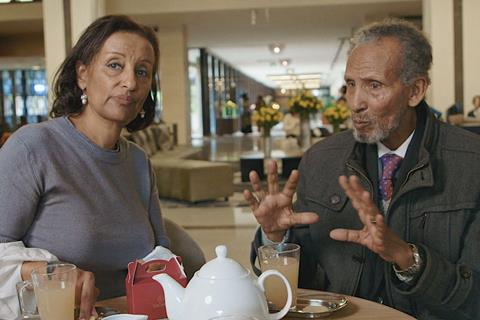
Austrian director Ruth Berckermann’s latest feature sees the luxury Hilton hotel in the Ethiopian capital of Addis Ababa that was built under the regime of former emperor Haile Selassie becomes the location for an intriguing personal reflection on the country’s chequered history and current-day identity crisis.
Fresh and nuanced view of a country whose uniqueness is still poorly understood
Premiering at the Berlinale two years on from Beckermann’s last documentary, Favoriten, which subsequently went on a multi-stage world festival tour. Wax & Gold doesn’t have the warm glow and hopeful message of that Vienna inner-city elementary school study, but it will likely appeal to audiences who have even a passing interest in African history and the continent’s rapid urbanization. After further festival play and specialist theatrical bookings, it could easily end up on a cineaste-oriented streaming platform.
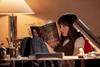
Beckermann is both the director and the voice-over narrator of a film introduced by a quote from French sociologist Pierre Bordieu: “to report on things differently means to report on different things”. At first, however, it’s the familiarity of what we see inside the Hilton Addis that is so striking. Guests are greeted, luggage conveyed, conference delegates shepherded beyond the velvet rope (ironically, the first one we see here is a USAID conference, before its budget was slashed by Donald Trump).
The hotel was inaugurated in 1969 as part of a national modernization programme by Ethiopia’s then emperor, Haile Selassie, and the director admits that it was her childhood fascination with this “king of kings… who hardly ever spoke and often seemed sad” that has brought her here, many years later. Beckermann’s goal seems fuzzy at first – all she knows is that it has something to do with “searching for Ethiopia’s place in the geography of my memory”. But her uncertainty becomes a kind of strength as the director and her small crew set about finding the story, filming hotel staff meetings and fashion shows, getting caught up in wedding receptions, or interviewing locals who are part of the country’s new professional elite – like communications entrepreneur Yasser Bagersh.
Sometimes the approach is a little confrontational, such as when the director asks two embarrassed concierges if they ever procure prostitutes for guests, but the default tone is a gentle, probing irony. Beckerman more than once turns this on on herself, recognising she is a white European who has turned up for a few weeks to try to understand Africa.
Much of what the director knows about Ethiopia’s recent past was gleaned, she admits, from Polish writer Ryszard Kapuscinski, whose influential 1978 book The Emperor exposed the increasingly autocratic nature of Selassie – a man who had 27 limousines, whose lapdog had its own servant, and who reigned over the desperately poor country for 44 years. Beckermann asks hotel staff to read out passages from the book; she also asks a young local writer to read sections of it aloud to music improvised by Addis-based musician Samuel Yirga, and later interviews Selassie’s elderly valet. Archive footage of the Selassie years – including his visit to Jamaica, where he was worshipped as a God by the Rastafarians – is interleaved throughout.
The film’s title, it is revealed, derives from a local poetic tradition that takes its name from a metalworking technique: hidden meanings are the gold that is revealed once the surface meaning – the wax cast – is removed. Beckerman applies the same technique to the cocoon of the Hilton Addis Ababa; a place which stands in isolation from its surroundings, revealed in a late shot taken from a balcony that show ths shanty dwelling that surround it.
What emerges – perhaps most revealingly in a discussion between a group of partly Westernised young Ethiopians in the hotel lobby – is a fresh and nuanced view of a country whose uniqueness is still poorly understood, even among well-informed Africa watchers. In the last five minutes, any answers we’ve been given become questions once more, as the camera glides around the streets of a capital that is being transformed beyond recognition by Chinese money, but where people still have to queue for hours just to get a bus home.
Production company: Ruth Beckermann Filmproduktion
International sales: Celluloid Dreams info@celluloid-dreams.com
Producer: Ruth Beckermann
Editing: Dieter Pichler
Cinematography: Johannes Hammel