The quadruple Bafta winner on his first time at the awards, his fallout with Harvey Weinstein and pushing for a documantary award.

Aged 30, Asif Kapadia was nominated for three Bafta film awards for his debut feature The Warrior in 2003 — the first film ever nominated simultaneously for outstanding British film, British debut and film not in the English language. He won for the first two, sharing British film with producer Bertrand Faivre.
Kapadia went on to win two more Baftas, for best documentary — Senna in 2012 and Amy in 2016 — as well as the Oscar for Amy. His latest documentary Kenny Dalglish, about the former football player and manager, is competing in this year’s Bafta Film Awards.
You won two awards at the 2003 Bafta Film Awards. Which one was most memorable?
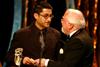
Best debut, which was presented by Dickie Attenborough. He walks out on the stage of Odeon Leicester Square and introduces the award, and he opens the envelope and says, “And the winner is Asif Kapadia.” I walk out, and it’s amazing, everyone’s clapping, and I go up and he gives me a hug, and it’s all great. And then someone comes out and taps me on the shoulder and says, “He forgot to say the nominees. Can you go back?”
And I go back to my row and then Dickie comes out and presents the award again, and I do a pretend “Hey!” but it’s like a fake cheer, and they use that in the TV show. It looks like, “Who does he think he is, he’s not even bothered?” I go back on stage, and go to give Dickie a hug, and he’s embarrassed. So the whole thing on TV looks so awkward because it was take two.
And outstanding British film?
Remember who used to sit in the middle of the front row at the Baftas? Harvey Weinstein. He was our distributor. He had flown me to New York, and he said, “You have to do your next film for me. If you don’t sign a three-picture deal, I’m not going to release your film.” I didn’t sign the contract, and he killed The Warrior in the US and everywhere else. It eventually came out years later because Anthony Minghella pushed him to bring it out. So seeing Harvey and his entourage on the front row, that’s one thing I remember of that moment of being on stage.
Who did you meet that evening?
I have a photo with Martin Scorsese at the dinner after the ceremony, me with my Bafta, with my hero. He has his hand on my shoulder. That is the most memorable moment of the evening.
Where did you go that night after the dinner?
Our film was backed by Film4. We shot in 2000, premiered in 2001, released in 2002, and they’d had a regime change by the time of the 2003 Baftas. Miramax didn’t like the film, so we’ve not got anyone that’s going to throw us a party. I don’t remember the party after the Baftas. I remember the next day going to my mum’s house, and there are lots of photos of my family with the awards.
Bafta introduced an award for documentary with the 2012 ceremony, just in time for Senna — and you won.
After The Warrior, I ended up being invited onto Bafta juries and committees, so I saw how it works inside the machine. I was on the film committee and I was the only person in the room who kept saying, “Why do we not have a documentary film award?” Our chair Nik Powell didn’t think there were enough good documentaries to justify there being one.
You have these committee meetings and people saying, “There’s not enough seats for famous people, how are we going to fit in the little lowly doc people?” So anyway, they let them in eventually.
I would say documentary is the category that shows the most diversity and international breadth, or women winning, or producers who are directors. It’s a really important award.
What was the impact on your career after your first Bafta wins?
I would say there’s a divide between major filmmakers who saw The Warrior and loved it — I received calls from Martin Scorsese, Terrence Malick and Ridley Scott — versus the execs looking at the bottom line and going, “Well, we don’t really think the film made enough at the box office.” It didn’t become easy to get a second film made.
But I was asked to do a photoshoot by Vanity Fair and I was in a photograph with Anthony Minghella and Alan Parker taken by David Bailey. It was a bit weird being in between these other famous British filmmakers, but somebody decided to invite me to that. That was off the back of the Baftas.


No comments yet