

















CJ 4DPlex’s premium-format screens are expanding globally, delivering box-office growth and attracting the interest of A-list filmmakers, as the firm’s CEO Jun Bang tells Screen.
One of the greatest challenges facing the exhibition business is how to offer a markedly different experience to what many people can now achieve at home. Enter CJ 4DPlex, the South Korea-based company behind a network of more than 1,270 premium format screens across 80 countries that offers an immersive alternative to the traditional cinematic experience.
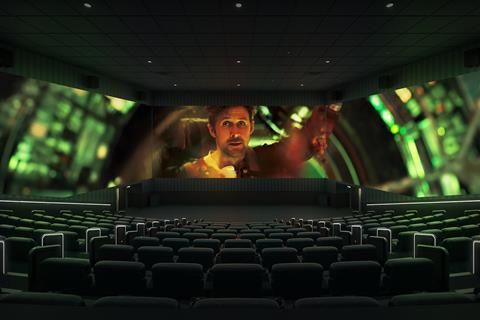
These include 4DX, the ‘multi-sensory’ system that combines motion-based seating with effects that simulate lighting, weather and scents from the big screen content; and ScreenX, which expands select sequences from the film onto the left-and-right-side walls of the auditorium to provide a 270-degree field of view. A more recent addition to the portfolio is Ultra 4DX, which combines the two.
“The way theatrical is going is into premium and immersive experiences,” says Jun Bang, CEO of CJ 4DPlex, a subsidiary of South Korean conglomerate CJ Group. “There is a consensus that the traditional offering supply is a little too large at the moment, which means we’re going to start seeing conversions into more premium and experience-based offerings. I see premium specialty formats becoming the standard of cinema and we are going to drive that space.”
The numbers agree. In 2025, 4DX and ScreenX generated $497m in global box office, delivering 32% year-on-year growth and outperforming the broader theatrical market. Some 198 new locations were added with exhibitors including AMC, Cinepolis, Cinemark and Showtime Cinemas. Leading titles included Avatar: Fire And Ash and F1: The Movie.
“It’s a testament to how the format has changed in terms of technology, content and marketing but also this dramatic trend in cinema where people want a premium or immersive experience,” says Bang. “We have something different to offer and I believe this growth is going to continue into 2030 and beyond.”
The technology has come a long way since 4DX was first launched in 2009 by CJ CGV, the exhibition arm of CJ Group, in a bid to tackle the growing threat of home entertainment and extend the amount of time a film played in theatres. Nearly 300 films were given the 4DX treatment from 2024-25.
ScreenX followed in 2012 as an advertising format, offering an eye-catching alternative to traditional commercials. It moved into feature films in 2016, expanding from just a few titles annually to 96 features in 2024-25.
Quality counts

The technology itself may be impressive but such advancements ride or die on the quality of the content. “It’s one thing to invest in the hardware and infrastructure within a theatre but it’s creating the content for those three screens that is the real investment,” says Bang. “It was an uphill process communicating to the creators that this is an additive format and was not going to disrupt their babies in any way. Once we had the content down, ScreenX started making its run into the market, post-Covid. That’s when it took off.”
One significant development for ScreenX has been an increase in the average time that the side screens (or “wings” as many creators call them) turn on during a film. In the early years, there might have been 20 or 30 minutes where the picture opened up with the full 270-degree view. Now, it ranges from 60 to 100 minutes.
CJ 4DPlex has an in-house production team that generates this content, in close collaboration with the filmmakers and studios that provide a wealth of unused footage and assets to build out their worlds. On Top Gun: Maverick, director Joseph Kosinski placed multiple cameras in the cockpits of fighter jets to capture the action, the majority of which would never have surfaced had it not been for ScreenX.
“It was a happy accident because I had six cameras in the cockpit with Tom [Cruise] and the other actors and it turned out to be perfect footage for the ‘wings’ in ScreenX,” Kosinski has said previously of working with the format.
The 2022 feature remains the top performing title for Ultra 4DX. After that experience, the filmmaker had ScreenX in mind when making F1: The Movie. “He incorporated similar tactics at an amplified level for F1,” says Bang. “In terms of market share, F1 was number one for us among Hollywood blockbusters last year. This is because [Kosinski] got involved early on and incorporated himself as part of the publicising process within ScreenX theatres.”
When Japanese anime blockbuster Demon Slayer: Kimetsu No Yaiba Infinity Castle returned to cinemas via ScreenX in March, it boasted more than 500 shots in the premium format.
Bang explains that directors, producers and studios have become massively invested in overseeing this additive content to ensure it matches the calibre of the central screen. “We’ve been doing more Japanese anime and they have a mastery and artisanship that comes down to the pixel level,” he says. “Fans love it because they know that — if it came from the studio — the quality is going to be great.”
Recent animated features adapted for ScreenX include Chainsaw Man — The Movie: Reze Arc, The Bad Guys 2 and box-office smash Zootopia 2. “Animators feel that the ScreenX extension is much more intuitive for them,” says Bang. “They usually create a 3D world and we only see a bit of it, so they love that ScreenX extends more of the world that they had to build. They get a chance to showcase more of this great world that they imagined.”
Set visits
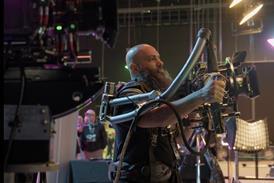
The next step is coming soon. Just as Imax cameras have been on sets and locations for many years, dedicated ScreenX cameras began rolling on productions in late 2025. CJ 4DPlex has previously explored this for concert films and on some local titles, but this will be the first time it has expanded into major productions outside of South Korea.
“I can’t name the films yet, but we have some prominent blockbusters coming up this year where we’ve brought our cameras to be a part of the filming process so that certain scenes will capture the entire thing with ScreenX,” says Bang. “That development started happening late last year where we have dedicated cameras on set, filming multiple angles. They will be coming soon.”
While looking ahead, CJ 4DPlex may also look back by giving the ScreenX treatment to beloved titles. “I’m actively having our team look at classic catalogue pieces, not just of US or UK films, but in Korea, Japan, India, the Middle East,” says Bang. “It would ease new audiences into our formats by taking a traditional franchise of excellence — that people watch annually — and making it available on ScreenX for a limited release to see an extended universe.”
It is an approach Sphere in Las Vegas has taken with The Wizard Of Oz and US immersive technology firm Cosm has explored with The Matrix. “Dome-like technology is something we’re tinkering with,” says Bang. “Do I see it as brands that are going to be pushed wide to every single market like 4DX or ScreenX? Probably not, but you might have cases where we could move into this space if it ultimately delivers an immersive and premium experience.”
He adds: “There’s a lot of growth to be had in the theatrical sector. The exhibition business has had its ups and downs and it’s been tumultuous post-pandemic, with multiple changes on the theatrical and studio content side. But one thing I can say is that the premium format space is not a trend that’s going away.”






No comments yet