














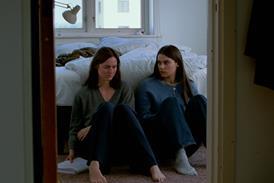

Cooper Raiff, David Duchovny, Hope Davis and Kaitlyn Dever star in uneven Sundance Premiere title
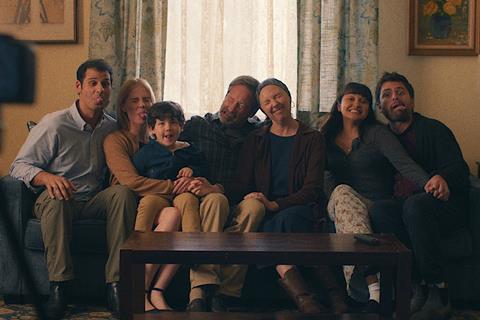
Dir: Jay Duplass. US. 2025. 106mins
A troubled family unravels in the wake of a tragic death in See You When I See You, a bittersweet comedy-drama lacking a sharp focus or richly detailed characters. Based on comedian Adam Cayton-Holland’s memoir, which detailed his sister’s suicide at 28, the film is an ensemble piece that surveys the wreckage as the woman’s parents and siblings grieve in their own ways. Director Jay Duplass crafts a sensitive portrait of loss and forgiveness but ,for a picture based on actual events, there is an artificiality to the proceedings that undercuts the material’s inherent poignancy.
There is an artificiality that undercuts the material’s inherent poignancy
The filmmaker unveiled his first feature, 2005’s The Puffy Chair, at Sundance, so it’s fitting that his latest picture premieres at the same festival. See You is Duplass’ follow-up to last year’s well-reviewed The Baltimorons, which won the Narrative Spotlight Audience Award at SXSW. Raiff is joined by a star-studded cast that includes Hope Davis, Lucy Boynton, David Duchovny and Kaitlyn Dever, which will help lure audiences to this tearjerking affair.
It has only been a few months since Leah (Dever) died by suicide, and her older brother Aaron (Cooper Raiff) is still reeling from the loss. He didn’t just lose a sister but a best friend, and he is fearful that his whole mental-health struggles might send him down the same path. Ghosting his new girlfriend Camila (Ariela Barer) and drinking to numb his sorrow, he adamantly opposes the idea of a funeral for Leah, unable to even imagine enduring such an event. (Aaron’s conservationist mother Page, played by Davis, is in agreement with him.) Aaron feels distant from his father Robert (Duchovny) and older sister Emily (Boynton), who work together as lawyers and are far more composed and rational than he is. Those around Aaron encourage him to see a therapist, but he refuses — until his behaviour becomes wildly out of control.
Duplass has often chronicled the messiness of relationships and the vulnerability involved in opening oneself up to others, so See You would seem well-suited to his understated, naturalistic style. And the picture has some incredibly affecting scenes, in particular when it explores how therapy can ease mental burdens without ever entirely erasing them. (What especially plagues Aaron is that he was the one to discover Leah’s body and he blames himself, believing he could have done more to help her.)
But despite a few emotionally raw moments, See You fails to succeed in one crucial regard. Aaron is meant to be an immature, sarcastic goof-off who has never taken life seriously. (He has co-founded a sophomoric humour site which, according to him, is mostly an excuse to make diarrhoea jokes.) One suspects that one of the reasons Aaron adored his younger sister is that they were the two irreverent members of their family. The role requires Raiff to demonstrate Aaron’s self-destructive, self-pitying temperament while also hinting at his big heart and combustible charisma.
Unfortunately the performance from Raiff, the writer-director-star of the indie films Shithouse and Cha Cha Real Smooth, isn’t nuanced enough to showcase these different sides of Aaron. We see his smart-aleck demeanour, but not enough of his growth over the course of the film. As a result, the character, who like Leah pondered suicide, feels too cutesy and glib to be truly heartbreaking.
Leah’s death is not the only challenge facing the family. In a shaky subplot, Page notices a lump in her breast, although she insists she will not go to the doctor, no matter her husband’s protestations. The disagreement exposes a significant tension in their marriage but Duplass does not give this story enough screen time, stranding Davis and Duchovny in a melodramatic narrative. See You aspires to be a rich tapestry that illuminates how each character was in turmoil even before Leah’s suicide, but Cayton-Holland’s superficial screenplay lacks the searingly truthful sequences that encapsulate the mix of pain, anger and love within every family.
Tellingly, some of the finest performances belong to peripheral characters outside of the family circle. Barer is lovely as a woman who wants to give Aaron another chance but isn’t sure he is ready to grow up. And Poorna Jagannathan does strong work in the straightforward role of the psychiatrist who finally gets Aaron to confront his trauma and guilt rather than vainly wave them away with booze and jokes. It’s a shame, then, that See You falls back on tired devices such as fantasy sequences and reimagined flashbacks to articulate Aaron’s inner journey to acceptance and healing, which play out like flimsy substitutes for the real work required in the grieving process.
Production companies: Astute Films, Duplass Brothers Productions, Winter Coat Films
International sales: CAA, Christine Hsu, christine.hsu@caa.com
Producers: Fred Bernstein, Jay Duplass, Kumail Nanjiani, Emily V. Gordon, Adam Cayton-Holland
Screenplay: Adam Cayton-Holland, based on Adam Cayton-Holland’s memoir Tragedy Plus Time
Cinematography: Jim Frohna
Production design: Molly Coffee
Editing: Jay Deuby
Music: Jordan Seigel
Main cast: Cooper Raiff, Hope Davis, Lucy Boynton, Ariela Barer, Kumail Nanjiani, Poorna Jagannathan, David Duchovny, Kaitlyn Dever





No comments yet