








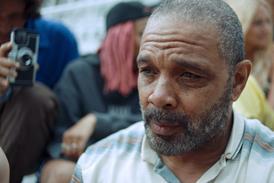



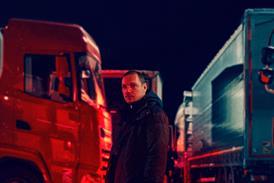
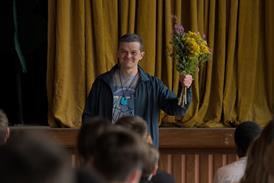

The historical epic, which premiered in Cannes last year, is getting a limited theatrical release in the US from today (January 9) through Janus Films
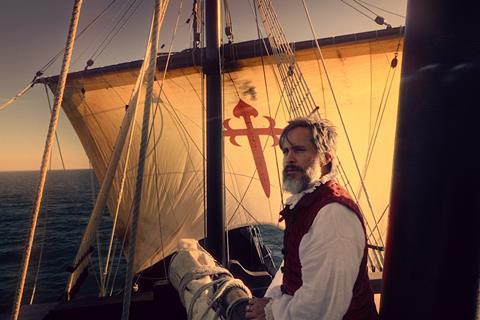
Famed Portuguese explorer and navigator Ferdinand Magellan was killed on an island in the Philippines in 1521 while on a Spanish-sponsored expedition to what were known at the time by Europeans as the East Indies. It’s appropriate then that Filipino director Lav Diaz’s revisionist biopic Magellan, which premiered in Cannes Competition last May, has Portuguese and Spanish as well as Filipino producers.
Sold by Luxbox, with Janus Films giving the film a limited theatrical release in the US from today (January 9), this is a colonial story told “from the point of view of the other,” according to Portuguese producer Joaquim Sapinho of Rosa Filmes.
“If you think about Portugal or England, Lav Diaz would be the other… we are doing this as a reversed shot, the story told from the point of view of a Filipino,” he adds on the film’s anti-colonial slant.
Clocking in at 160 minutes – far shorter than most of Diaz’s other works, which can stretch to 10 hours or more – and with a well-known star, Mexico’s Gael Garcia Bernal, Magellan is arguably the most accessible film yet from the die-hard pioneer of slow cinema. (It was also the Philippines’ entry for the best international feature Oscar, although didn’t make the 15-strong shortlist.)
“We shot a lot and then decided to shorten it a bit so it can cater to a broader audience,” says Diaz cheerily when asked how he managed to bring in the movie at under three hours.
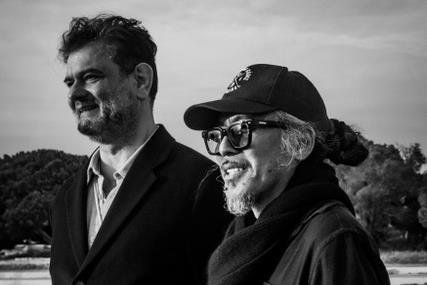
The director’s previous collaborations with Sapinho include When The Waves Are Gone (2022) and Essential Truths Of The Lake (2023). They’re also in post-production on another project shot in Portugal, The Sadness Of A Portuguese Woman starring Monica Calle.
However, Magellan was by far their most ambitious endeavour so far. The budget was around €2m – modest for a complex, full-scale historical epic with a large cast and crew – and that filmed at sea and on two continents. That price is even more of a snip when you consider that Diaz has many hours of unused material he is planning to incorporate in a companion movie about Magellan’s young wife.
Early on, the director had wanted to make the film entirely about Beatriz (played by Ângela Azevedo) and thereby “invert the hierarchy” of the typical biopic of a great man of history. “The original plan was to shoot a story about the wife,” Diaz confirms.
During post-production, however, he decided to focus instead on Magellan and his Malay slave, Enrique (played by Amado Arjay Babon). But he has already assembled a different cut that would reinstate much of the Beatriz material.
“It’s a sequel or prequel – it’s another film,” says Diaz of the companion feature, which has the working title Beatriz The Wife and is likely to be far longer than Magellan.
Sapinho says he would like eventually to have the two versions running side by side.
All the main producers on Magellan have strong reputations of their own as arthouse directors – perhaps one reason why they were so sympathetic to the vision of an uncompromising auteur like Diaz.
As the founder of leading independent production company Rosa Filmes, Sapinho has directed features including Haircut, which premiered in Locarno in 1995; Police Woman, which screened at the 2003 Berlinale; and This Side Of Resurrection, which had its premiere in Toronto in 2011.
He has also produced films by Alberto Serra including 2022 Cannes Competition title Pacifiction. Serra in turn is friendly with Diaz, and Sapinho therefore invited the Spanish filmmaker to come on board as a producer through his company Andergraun Films.
Lib Films in France and Black Cap Pictures in the Philippines were the other producers.
Financing was secured in Portugal, Spain and France, with backers including Aide aux cinémas du monde co-managed by the CNC and Institut Français; Portuguese Institute of Cinema and Audiovisual; Spain’s ICAA; Canary Islands Film; and broadcasters including RTP and RTVE.
Dream role
In 2023, with agreement from Diaz, Sapinho approached Garcia Bernal about starring in the movie. The Mexican star quickly agreed, saying that Magellan had been his dream role since he was a child. One sign of the actor’s commitment was that he learned Portuguese before the production began.
When the original partner from the Philippines failed to secure their part of the financing, director/producer Paul Soriano stepped in to bridge the gap and earned an executive producer credit.
“This was two months before shooting began in November 2024,” Sapinho recalls.
When it came to sourcing the film’s key prop – the ship that Magellan sailed on the Spanish expedition that led him to the Philippines, part of a five-ship fleet – the producer discovered that, in Seville, there was a replica of a “carrack”, as the large sailing vessels were called.
The first leg of the film was shot in the Philippines before production moved to Portugal and Spain, and then returned to the Philippines to wrap.
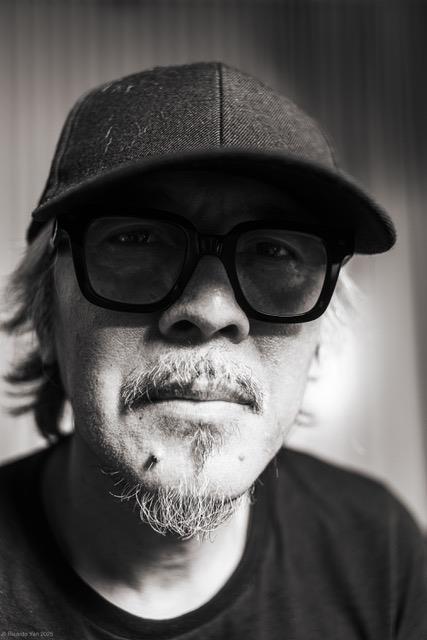
Diaz poured the intense historical research he conducted into the Magellan screenplay, which he wrote in English before having it translated into Portuguese and Spanish.
“That epoch of our history, that was the start of everything,” the director reflects on Magellan’s impact on the Philippines. “Everything changed when he came. Culturally, spiritually, politically, he changed everything.”
The explorer, Diaz continues, “murdered people to survive.” He was an “ambitious and jealous man,” but the filmmaker also describes him as “very human. I wanted to look at him that way, not as a heroic figure, not as superman… nothing fancy, nothing Hollywood.”
Diaz questions the popularly held belief in European accounts of Magellan’s life that Lapu-Lapu, the leader of the Mactan, killed the explorer. Instead, in the film, Lapu-Lapu is depicted as a mythical figure whose legend is revived by another chieftain to try to make Magellan leave.
The director himself was doing the cinematography alongside Artur Tort, the Cesar-winning cameraman known for his work with Serra on films including Liberté and Pacifiction.
In certain ways, the relationship between the European producers and their Filipino colleagues mirrored that between the real Magellan and the islanders he tried so hard to convert to Christianity.
“There was a lot of respect between the Spanish group, the Philippine group and the Portuguese group. Of course, there was a lot of adjustment as well,” Diaz notes. “The Portuguese group, they are very rigid; they have a spot-on schedule. For us, it’s a very organic, freewheeling style. I am so used to being alone during my shoots or having just a few people. With the Portuguese group and the Spanish group, they have so many people working on different departments.”
Production moved at a swift pace, with the film wrapping in early 2025 and post-production finished in time for the film’s launch at Cannes. “It was almost like a blitzkrieg,” Sapinho says.
Diaz observes that special care was taken to ensure that the creative integrity of the project was preserved at all times – and that European influence was kept in check.
“You have to be very careful that you are not overwhelmed again by the dominant eye of the West in terms of everything from the making of the film to the distribution and marketing,” he observes. “With this group [of producers], I think it is more transparent. The idea of collaboration is very clear. Nobody is going to be on top, nobody is going to be imposing…”






No comments yet