Young audiences are excited for authentic experiences — good news for venues projecting film from physical prints.

In 2008, Rebecca Lyon started working at Chicago’s Music Box Theatre as a projectionist, happy to be part of a venue that exclusively showed films on celluloid. But her worst fears were realised two years later. “We got a digital projector,” she recalls glumly. “[I remember] going through these waves of, ‘Oh no, it’s over — we’re going to get rid of our film projectors. What a terrible, miserable thing.’”
The Music Box was not alone in this trend: by 2013, the vast majority of US theatres had converted to digital in response to Hollywood’s decision to abandon film. But for those who love celluloid’s warmth and richness, film never actually went away — including at the Music Box. Indeed, numerous first-run theatres and repertory houses command sizeable audiences by offering film prints of old and new classics. To hear programmers tell it, though, the selling point is not nostalgia. Rather, it is the allure of a one-of-a-kind experience indicative of an increasingly eventised entertainment culture. Viewers of all ages are getting on board.

James Bell, senior curator of fiction at the BFI National Archive, who programmes the biennial Film On Film Festival, has noticed generations of filmgoers flocking to his selections — from 8mm to 70mm to nitrate — albeit for different reasons.
“The audiences are getting younger,” he observes. “Some of the research we found when asked why people came out to see a certain title, for the older audience, they were saying, ‘I want to see the film,’ as in, the title. But for younger audiences, ‘I wanted to see this film print.’ It was the fact it’s truly on film, but also the stories around the particularities of this print. When we screen things on print in the BFI Southbank programme, we’re seeing bigger audiences but also younger audiences — a real mix.”
His findings might contradict the perceived wisdom that Gen Z is not interested in a format that predates them. But Bell suggests, “It’s a live event. Every projection of a film print is live, it’s never the same. The print changes whenever it runs through. Letterboxd reviews after a screening will be a publicising the fact they’ve seen something on a film print.”
Finding audiences
That said, Bell does not believe his job is to cater to Gen Z viewers, a sentiment shared by Grant Moninger, artistic director at the American Cinematheque in Los Angeles: “You want to create something for everyone, and you’ll find the younger people through that.”
The American Cinematheque features film prints, alongside digital, with popular series such as the Ultra Cinematheque 70 Fest and the Nitrate Film Festival paying tribute to those specific formats. (Full disclosure: this writer occasionally moderates post-screening Q&As at the American Cinematheque.) For Moninger, the organisation’s ethos is just as important as what prints it screens.

“I brought in programmers that had minimal to no programming experience,” says Moninger. “They just had the passion and the work ethic. Hiring the right people and making it a youthful organisation — marketing, operations, everything — brings this energy. A young programmer discovering something is much more active than me remembering it. We have no rules. We could show [Jacques Tati’s] Playtime and Lawrence Of Arabia and Howard The Duck. It’s not a history lesson — it’s like history you’re living through.”
The lifeblood of these revival screenings is, of course, the prints themselves, which are precious commodities. The BFI enjoys a massive archive, which it will sometimes lend out, whereas smaller venues co-ordinate with outside sources to secure prints. (“We have a person on our team, that’s his entire job,” notes American Cinematheque director of programming Chris LeMaire.) Those sources include studios and distributors, but also private collectors who specialise in obscure genre titles. Large US film warehouses, including the George Eastman Museum and UCLA Film & Television Archive, are also invaluable.
For certain beloved titles, it makes economic sense for venues to buy their own prints. Both the American Cinematheque and the Music Box have 2001: A Space Odyssey on 70mm. As Lyon, who now serves as programmer and assistant technical director at the Music Box, explains, “It costs thousands of dollars [to have a print made]. But every time we show 2001, it sells out, so it was worth it because we’re saving so much on shipping.”
Although new prints are struck for venerable films, older prints circulate as well, each wearing their history literally on their surface. Programmers ensure no print is so damaged that it would make for an unsatisfying viewing experience, but they often introduce a screening by discussing the print’s origins so an audience can appreciate its lineage.
“You’re having that encounter with the object itself that’s exciting,” says Bell. “We had a nitrate print of The Man Who Knew Too Much, the original Peter Lorre/Hitchcock [version]. We discovered it had travelled to Nazi Germany in 1939. This is a film that has all these coded anti-Nazi sentiments in it, so the fact this object had that [history] was fascinating, and we can present it in that way.”
Indeed, nitrate is flammable, not to mention prone to shrinking, which lends surviving prints a poignant fragility. “Most film festivals, people are there to see the film for the first time,” says Moninger. “At the Nitrate Film Festival, you’re there to maybe see the film for the last time.”
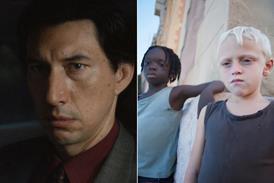
In Los Angeles, the New Beverly Cinema (a repertory house) and the Vista Theater (primarily projecting new pictures) are both owned by Quentin Tarantino and exclusively show film prints, the auteur’s long-avowed love for celluloid helping to keep the format alive. But in a year in which two award-winners that shot on film, One Battle After Another and Sinners, achieved significant global box office, those who spoke to Screen International suggest the growing enthusiasm for revival screenings on film dovetails with a building audience desire to see new movies the same way.

“When Sinners came out, nobody could see it in 70mm in Chicago, and people were upset,” says Lyon. The Music Box is the only theatre in the area able to project 70mm, and because the programmers had already booked other films at that time, they could not screen Sinners until the Music Box 70mm Festival that August. “It sold out every showtime,” she says. “People waited because they wanted to see it on 70 specifically.”
There is a lesson here for Hollywood, which has struggled post-pandemic to convince viewers to leave their couches and see a picture on the big screen. Maybe celluloid will never again be the dominant shooting format — and many theatres do not have the finances or technical know-how to convert back to film projectors. But the industry could learn from individual venues that are crafting a vital moviegoing experience.
“We definitely have higher numbers when we show something on film,” says Lyon. “When we’re doing repertory stuff, if we can get a print, we will go for it. Maybe we have to argue a little bit with the studio — if they have a digital restoration, they don’t always want to give [the print]. But it’s personal preference and also because we know there’s an audience for it — it’s just more special.”


No comments yet