














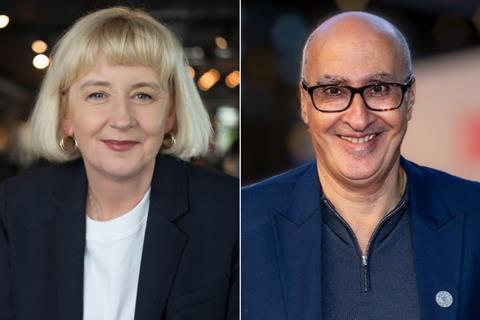
Finn Halligan is brimming with enthusiasm for her first edition as director of international programs at Saudi Arabia’s Red Sea International Film Festival.
“It’s a real opportunity to talk to people and build cinema with an audience that’s eager for ideas, to open up, to talk, to be part of a conversation,” says Halligan, ahead of this year’s festival, which will play 111 films in the port city of Jeddah from December 4-13.
“It’s a question of having a conversation with the people of Saudi Arabia, with filmmakers talking to people, and films talking to people, and the ability to programme films into a culture which is just opening up to cinema. That’s exciting for me.”
“It’s not a completely blank slate – people are very savvy,” Halligan says of the Saudi Arabian market. “But you can play a bit with the history of cinema. It’s not introducing arthouse cinema, it’s building the foundation blocks and an appreciation of the thoughts, sentiment and imagery of cinema. That’s new.”
Halligan’s focus on the local audience is matched by Antoine Khalife, Red Sea’s director of Arab programmes and film classics, who has been with the festival since it launched in 2021.
“For the first three years, we struggled with the local audience because people didn’t understand what a festival is,” says Khalife. “Sometimes the films were not full, and we were very sad.”
The opening of a permanent home in Jeddah’s historic al-Balad district last year and significant outreach work in schools and universities, aiming to move the dial.
“We have to reiterate the word ‘festival’,” says Halligan of the relationship to the local audience. “[It means] you can come here, it’s for you. Your ticket enables you to walk the red carpet. You’re included.
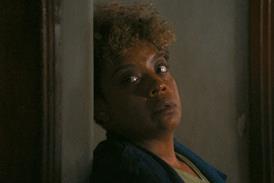
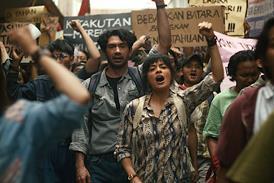
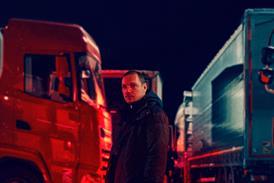
“You might see things on screen that might challenge you if you choose to go to those films,” she adds. “But you could also choose to go to a flamenco documentary [Farruquito – A Flamenco Dynasty]. You could go to the new Saudi film [Hijra]. You can go see The Voice Of Hind Rajab. You can go see Sirât, which will knock your brain about. It’s all here for you.”
One example is Pete Ohs’ Toronto title Erupcja, which Halligan has selected for its MENA premiere in the Festival Favourites strand. The romantic drama depicts the sapphic friendship between a Polish florist and a British tourist, and stars UK pop star Charli XCX, whose own music and performances are bold and provocative.
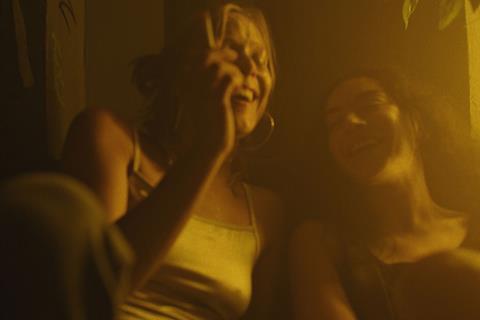
“There’s nothing in Erupcja that’s going to cause anyone a moment’s hesitation,” says Halligan, describing it as “a very sweet, innocent film about a female friendship”.
There is “great excitement” in Jeddah that the festival will have a Charli XCX film, Halligan says. “People love her here.”
The aim is to build a film culture, not just host an event.
“We want to encourage you to make cinema, to volunteer at the festival, to email the [Red Sea] labs or take that course at the university,” says Halligan, addressing Saudi Arabia’s population, 71% of whom are aged under 35. “That’s why it’s such a specific and exciting set of circumstances. You don’t get that everywhere else.”
Halligan took on the Red Sea role in July this year, having worked at Screen International since 2004 across two periods, most recently as chief critic and reviews editor.
She also oversaw Screen’s international talent development showcase, Stars of Tomorrow.
Saudi Arabia remains an unknown quantity to many in the international industry, and others have concerns about the state funding of the festival due to the Kingdom’s record on human rights.
Halligan notes the state money comes through the Red Sea Foundation, a non-profit organisation, and the festival also runs on sponsorship money.
“Nobody has said to me, ‘You can’t have a film because I’m anxious about Saudi Arabia or I’m worried about money’,” says Halligan, who is open to conversations on the topic. “I’m very happy to talk about what I’ve seen here and am doing here, while admitting I have a lot to learn.”
Programming relationship
Khalife covers programming for Arabic-speaking countries while Halligan heads up all other territories, with some crossover, such as Somalia, where Somali and Arabic are both major languages. The two programmers split the films evenly across the programme, with some sections more suited to one or another. “Antoine has more than I would in New Visions; I have more Festival Favourites,” says Halligan.
“It has been a strong relationship since the start,” says Khalife of the programming partnership, with the duo having worked together previously when Halligan led Screen’s Arab Stars of Tomorrow showcase at last year’s Red Sea.
“On paper, Finn selects international films and I select from the Arab world. But when we started working, we exchanged all the films together. She asked me to watch many films [and vice versa].”
Halligan is keen to emphasise the DNA of not just the festival but the Foundation that runs it: “[There is] a focus on cinema of Asia, Africa and the Middle East, with the train of thought being equality and diversity of voices, empowerment, and becoming the ultimate platform for that region.”
It is exemplified by Red Sea’s main competition of 16 titles, which is split 50-50 between the two programmers and has less room for European and Latin American cinema. “There just is not huge amounts of space,” she says.
One surprise in her new role has been the range of submissions, which totalled around 2,300 this year. “When I want to feel good about myself, I look at the submissions and see that people in Africa and Asia are responding well to what the Red Sea Foundation is trying to do,” says Halligan. “Sometimes in other markets we’re trying to explain it, but the industry in Africa and Asia gets it, and they’re submitting.”
Competition for titles
A packed MENA festival calendar now includes Cairo, Doha and Marrakech in the run-up to Red Sea, bringing competition for titles with Red Sea requiring at least a MENA premiere. Khalife says he began confirming films for the festival before Cannes and ended up getting “85% of the films I really wanted”.
Although the Red Sea Fund and Doha Film Institute have backed the same titles before, including Asmae El Moudir’s The Mother Of All Lies (which premiered at the 2023 Cannes Film Festival and had its MENA premiere in Marrakech), there is not current communication between the two festival programming teams.
“As a programmer, I choose the film I want and go to the rights-holder. I don’t go to other festival directors to see if they want it,” says Khalife. “But when I want a film, I insist. I call every day and night.”
Highlights from his Arab titles this year include the world premiere of Anas Ba-Tahaf’s A Matter Of Life And Death, which Khalife bills as “the second Saudi romantic film”, and the MENA premiere of Shahad Ameen’s Venice title (and Saudi Oscar entry) Hijra.
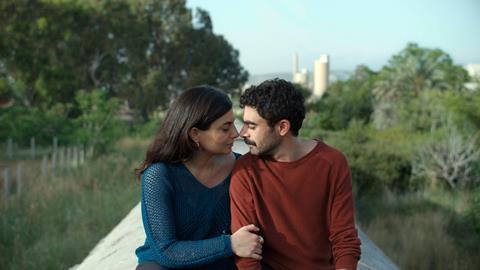
Five years into his role, Khalife sees improvements in filmmaking from the region. “Cinematography has become stronger technically, and the stories are both more local and international,” he says.
Several films this year demonstrate what Khalife believes is a maturity of narrative by taking place across several decades. They include Abu Bakr Shawky’s The Stories, Cyril Ayris’s A Sad And Beautiful World and Cherien Dabis’s All That’s Left Of You.
Since starting in July, Halligan’s focus has been on assembling a programming team – which includes Toronto film festival curator Giovanna Fulvi and Good Chaos producer Mike Goodridge – and putting this year’s selection together.
Halligan has made three visits to Jeddah this year, including two months in the lead-up to the festival. She expects to spend longer in the city next year with more frequent, shorter visits and more year-round programming at the al-Balad venue to expand the Foundation’s remit.
“I’ve worked around the world. I know that cinema is a great way of communicating,” says Ireland-born Halligan, who has lived in cities including Hong Kong, Madrid and London, and was a programmer at the Macau International Film Festival. “I thought this was an incredible opportunity that had my name written all over it.
”You can sit and write about why cinema should be this, or people in the industry should be that, or why they should be more inclusive. Then you can get a chance and you can try and do it.”






No comments yet